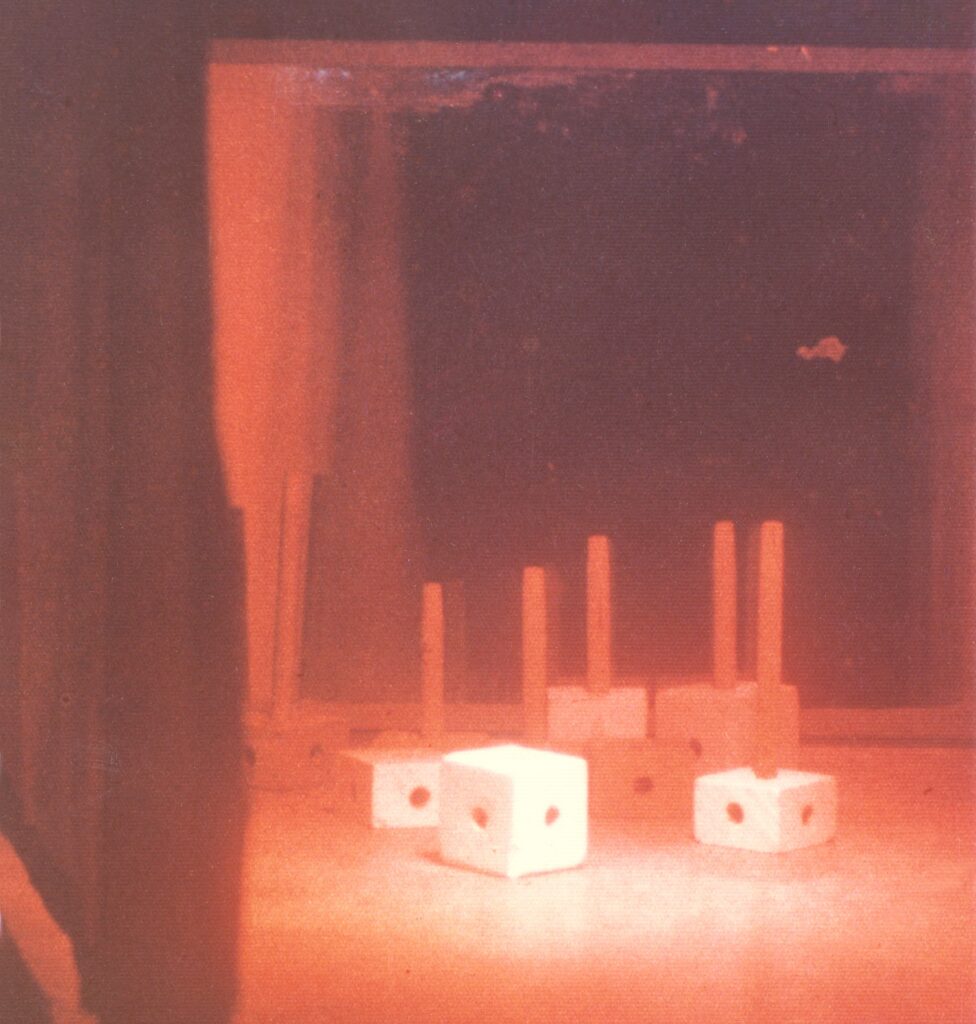
 REFLECTIONS, MINIATURES, AND SOUNDSCAPES by Gary Wilby – FUTUNA CHAPEL 2026
Gary Wilby – electric piano
Petrina Wu, Tina Wilby (‘cellos)
Natasha McMillan (violin)
Julie Coulson (narrator)
Futuna Chapel, Friend St., Karori, Wellington
Sunday, 19th April, 2026
Gary Wilby himself regards his sound-creations as “miniatures and intimate”, echoing in a real sense something of poet William Blake’s respect for small things, with the latter’s words “a world in a grain of sand”, reflecting Wilby’s own reflection of the worth that can be found, as he himself says, “…..sometimes in a small cell….”.
At Futuna Chapel in Karori we were invited to join In Gary’s “looking back” presentation of his own soundscapes and miniatures, often in interactive tandem with well-known works by some of the “greats” in cases when there’s been particular empathies with certain of these pieces – to the point where cross-fertilisation delightfully bubbles over like a babbling fountain. He actually used the music of JS Bach both to introduce and “round off” his concert, playing for us on an electric piano the theme from the “Goldberg Variations” and some impulsive “variants” which any Baroque composer transported to the twenty-first century would have surely recogtnised as viable connective musical tissue!.
Futuna Chapel, of course, needs no introduction to many Wellington concertgoers since its “induction” into the process of becoming a music-performing venue. Its wonderfully-vaulted ceiling acoustic gives the sound a “bloom”, and its striking stained-glass window configurations a visual ambience which together beautifully enhance the atmospheres generated by the efforts of modestly-numbered groups of musicians, both instrumental and vocal. Wilby cherishes a particular connection to the venue as a great and singular honour, in the form of his previous association with sculptor Jim Allen whose work in the chapel brilliantly enhanced the designs of the original architect John Scott.
After the Bachian introduction to the concert we next head a recording made by two string instrument players from Aotearoa New Zealand when visiting another far-off part of the world, the Monastery of Santa Maria in Sobrado dos Monxes. I’m guessing that one of these string players was a ‘cellist, but am unsure whether the other was a violist or violinist, or even another ‘cellist! Whatever the case Gary Wilby’s ensuing “Chant Futuna Connections” composition was given its first hearing in this country via the recording, haunting sounds putting something of a girdle about the earth!
Wilby then played a piece which he had come to associate with the Erebus Air New Zealand disaster, as the first music that came to his mind after hearing news of the tragedy – a teaching colleague from the UK whom he had got to know while at the same school during her time in New Zealand was among those killed in the disaster. The piece played was Chopin’s C Minor Prelude Op.28 No.20 – the lively and energetic variation was intended as a reprise which reflected Wilby’s recollection of somebody replete with an abundance of life and energy.
He then dashed into a kind of medley which he had given the title “Mashup” and which featured pieces with a similarly recurring harmonic pattern – I didn’t list the pieces whose transmorgrifications I still recognised, but the exercise seemed as much fun to play as to listen to! The following piece by Darius Milhaud then gave us one of the dances “Sorocaba”, from a Suite of the Saudades do Brazil Op.67 – this was the first of the dances which hearkened back to Latin American dance rhythms, though more wry and nostalgic than I was expecting from the composer.
I did enjoy Richard Rodney Bennett’s “A Week of Birthdays” characterising the famous nursery rhyme describing different “birthday” attributes, stimulating and picturesque little “character-sketches”, one for each day of the week. Footnote: – I remember once checking out my own actual birth week-day and vaguely remembering it might have been Wednesday – oo-er!! – still, Bennett’s “Wednesday’ piece is not unlike in character and mood a couple of Dmitri Shostakovich’s more “moody” Preludes from the Op. 87 set, so I’m perhaps in good company! I had not previously heard the Ravel piece, to my shame (and I thought I knew all of the composer’s keyboard works!) – Wilby’s description of this brief piece mentions its “notational ambiguity and surprising dissonance” which seemed to sum up what we heard most enchantingly and disconcertingly.
True to instinct, his next piece was very much a concerted effort on the part of some fellow-musicians – it was named “Compassion Chant” resulting in a spontaneously-composed outpouring of feeling in response to the Island Bay Home of Compassion ‘s Sisterhood making a ‘millenium gift” oi a substantioal lease owed the Home by the adjoining Marae, Taput e Ranga, for the purchase of land some years earlier. The piece was first performed for the ceremonial Millenium handover which took place late in December 1999.
The occasion’s “reimagined” piece featured violinist Natasha McMillan playing a “prelude” to Julie Coulson’s spoken introduction to the work, followed by cellist Petrina Wu, whose instrument sounded the “chant proper”, before being joined in duet by the second ‘cellist, Tina Wilby – the recitative-like line became animated, even agitated in places, but then returned to a more peaceful and considered tone, imparting an awareness for us of the emotional range and scope of the situation.
Next, Gary Wilby reiterated William Blake’s idea of “a World in a grain of sand” with his “Three Contrasts”, pieces by turns whimsical, wry, deft, off-beat and abrupt, and then followed by a more extended collection of shortish characterisations, one which he had called “Simple Simon”, and based on a series of three descending notes. Two of the seven pieces (I think they were the last two) continued to resonate afterwards, each reminding me of Russian music – the bass resonances of one of the pieces brought Mussorgsky’s more reflective parts of his “Pictures” to mind, while the following piece featured a wayward-sounding Russian song with off-beat accompaniments, like a Tchaikovsky “Troika” gone slightly awry!
Perhaps the most esoteric of the presentations was ‘Water, Voice, Pulse”, three separate sound-bytes brought together on a pre-recorded “take” whose repeated character certainly garnered a mesmeric kind of effect, and with the rhythms gradually slowed down, leaving at the end a kind of “lost in space” effect – the chords resonate as the voice murmurs indistinctly until only single sounds are left, in the original repeated note form, followed by silence.
All that was left was the return of the “Goldberg Variations” theme, itself having now been “seasoned” or “grounded” by the concert’s multifarious influences one realised upon hearing the results of such exposure that things for the relatively straightforward theme could never be quite the same again, as the player’s musings and impulses demonstrated. Sincere appreciation to Gary Wilby and his candidly-expressed musical revelations, the afternoon’s peregrinations giving us all something to think about, and think about again……..