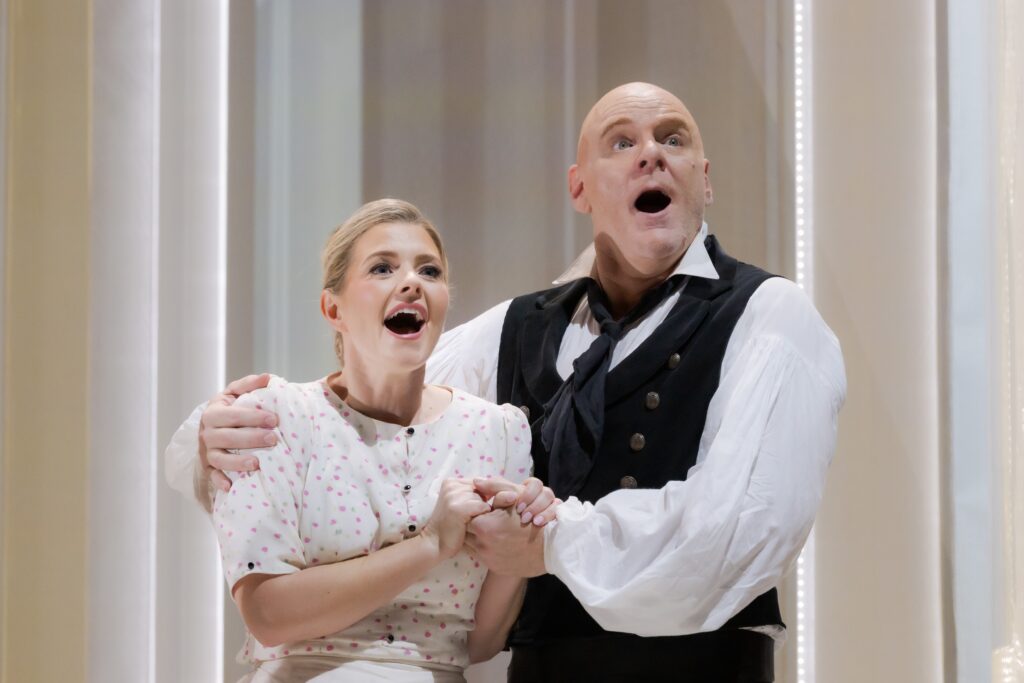
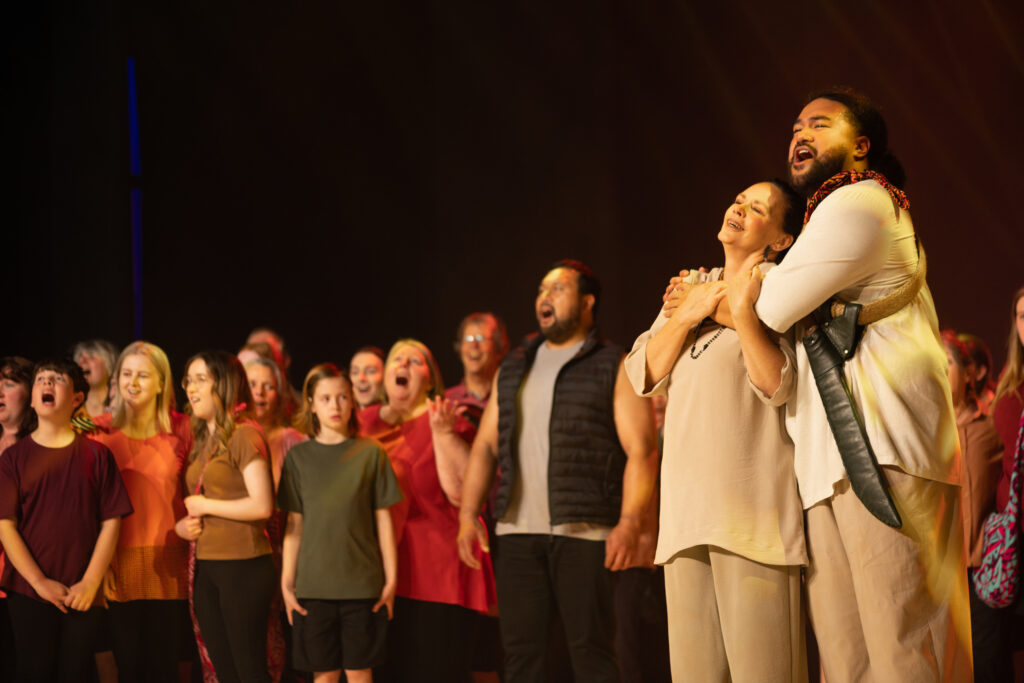
Manon – an operatic journey of turmoil and struggle for survival

Wellington Opera presents:
JULES MASSENET’s  MANON – Opera in Five Acts
libretto by Henri Meilhac

Cast:  Manon Lescaut (soprano) – Amina Edris
Le Chevalier des Grieux (tenor) – Pene Pati
Lescaut, Manon’s cousin (baritone) – Phillip Rhodes
Le Comte des Grieux, the Chevalier’s father (bass) – Wade Kernot
Guillot de Morfontaine ( tenor) – Patrick Power
Monsieur de Brétigny ( baritone) – Kieran Rayner
Poussette, an actress (soprano) – Sarah Mileham
Javotte, an actress (mezzo-soprano) – Jasmine Jessen
Rosette, an actress (mezzo-soprano) – Charlotte Secker
L’Hotelier (bass) – Brent Allcock
Guardsmen – Matt Landreth/Joshua Jamieson

Wellington Opera Chorus – director, Michael Vinten
Orchestra Wellington – conductor, Romain Dumas

Director – Sara Brodie
Set Design – Michael Zaragoza
Costume Design – Rebecca Bethan-Jones
Lighting Design – Paul O’Brien

St.James’ Theatre, Wellington
Saturday, Ist August, 2026
(until 9th August 2026)

Reviewed by Peter Mechen for “Middle C” and “Opera” (UK)

Manon is probably composer Jules Massenet’s most famous work, a five-act opera comique which premiered in Paris in 1884, and which has been a staple of the opera repertory ever since. My first encounter with this work’s name (and that of its composer!) was through a most diverting book I read during my musically formative musical years, a collection of anecdotes and quotations attributed to the legendary conductor Sir Thomas Beecham, well known as a wit and raconteur. Beecham adored French music and was famously quoted in the book as declaring – “I would give the whole of Bach’s Brandenburg Concertos for Massenet’s Manon and would think that I had profited by the exchange.”

Though I’ve now fallen under the opera’s spell (my feelings affirmed by this heart-rending production), it took a long while for my explorations to reach the character of Manon (and I’ve still not heard Puccini’s near-eponymously-named Manon Lescaut, nor have I read the original Abbé Prévost novel). I wasn’t at first attracted to the character of Manon herself, an attitude coloured by the less-than-flattering judgements of various (invariably male) commentators – of course the story of Manon is told all along from a male perspective (that of her ill-fated lover, the Chevalier des Grieux), which in my youthful eyes skewed the story against her favour – she’s portrayed as beautiful and charming, but also addicted to wealth and pleasure, and aware of the effects of her beauty and sexuality as tools in manipulating others for her own ends.

Getting to know and think about Massenet’s and his librettist Henri Meilhac’s work more closely, one develops increased sympathy for her character and her actions – her instincts as a “survivalist” necessarily inform what she does throughout, but ultimately take her beyond the point of return on the road to Le Havre in the drama’s heartrending final scene. I found myself less inclined or even able to sit in judgement on her character as merely “shallow”, and by the end of this performance found myself in a kind of wholeheartedly “born-again” agreement with the production’s director Sara Brodie, who expressed in a programme note the character’s determination to “survive” in a man’s world, and realise her “truths” beyond those of the conventional “male gaze”. That final scene opened within me a watershed of sympathy for both her and the luckless des Grieux having to endure their own shared-but-divided fates on that desolate road – Manon meeting her death and des Grieux left to endless darkness and despair. I thought of poet Dylan Thomas’s words regarding the toll exacted by the life-force in one of his poems – “that blasts the roots of trees is my destroyer”.

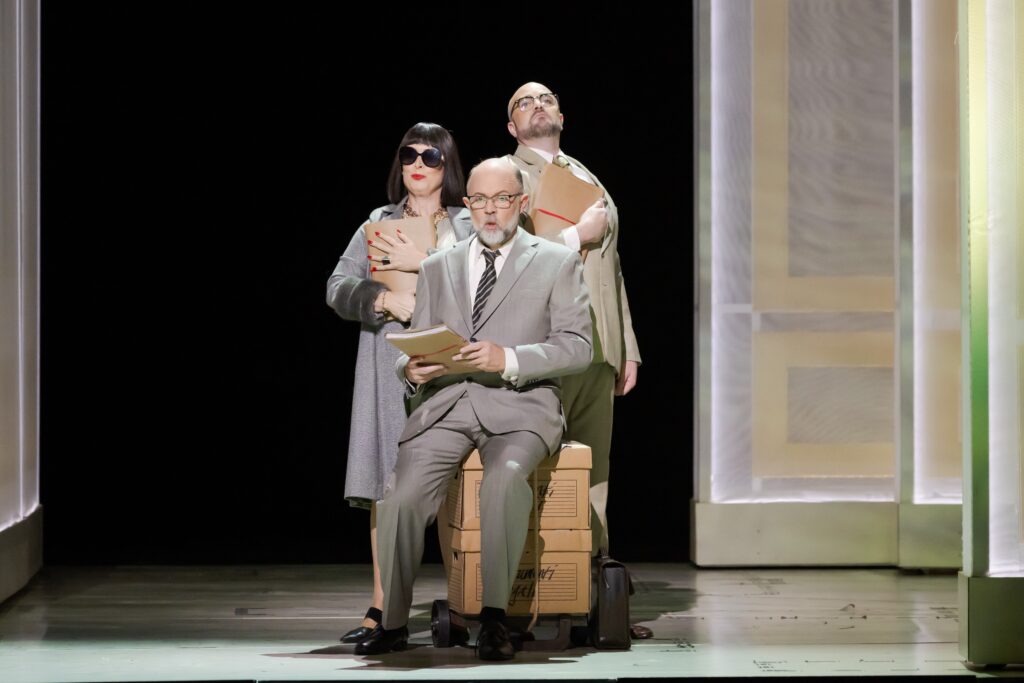
Naturally I was looking forward to the Wellington Opera production, relishing among other things the thought of witnessing in situ two much-acclaimed voices bringing these aforementioned characters to life – soprano Amina Edris as Manon Lescaut and Pene Pati as Chevalier des Grieux – luxury casting indeed! All seemed well at the beginning, with conductor Romain Dumas getting from the Orchestra Wellington band some superbly energetic introductory flourishes, garnished by heartfelt wind-and-string tones, setting in motion and colouring the ambiences of the story. Through what seemed a distinctive setting of old-world portals of public places, in this case a hotel next to a railway station, came a group of people, vociferously demanding the attentions of the hotelier and impatiently awaiting signs of a response!

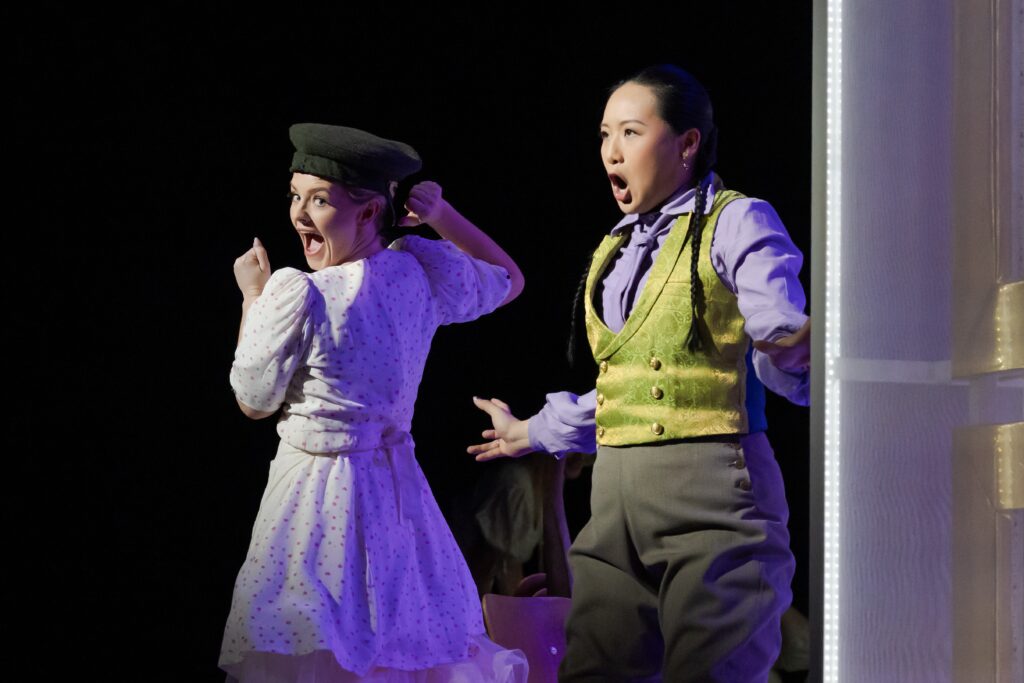
Here we met certain of the story’s significant characters – firstly the aged roue Guillot de Morfontaine  (Patrick Power) with an entourage consisting of three young actresses, Pousette (Sarah Mileham), Javotte (Jasmine Jessen) and Rosette (Charlotte Secker), plus a friend, Monsieur de Bretigny  (Kieran Rayner), all seconding the urgent demands of Guillot for service, to which the long-suffering hotelier  (Brent Alcock) eventually and good-naturedly responds. All splendidly acquitted themselves, with Patrick Power’s Guillot pompous and self-important in his utterances, and Kieran Rayner’s elegantly self-contained but purposeful de Bretigny a kind of “foil”, as well as the three actresses’ voices both mellifluously blending, and coquettishly keeping their escorts’ attentions. This, of course, like the original “Carmen” of Bizet’s, is an “opera comique”, featuring passages of spoken dialogue in between recitatives and set-piece arias and ensembles – though not a “French speaker” I was amply assisted by the surtitles in being able to relish the theatrical cut and thrust of the characters’ soliloquies and sung/spoken exchanges throughout.

Lescaut (Phillip Rhodes), Manon’s cousin (here, sturdily officious and fatherly of manner) appeared with two of his associates (Matt Landreth and Joshua Jamieson), ostensibly to meet Manon and escort her to the convent as previously arranged, but also to enjoy a shared game of dice with his companions. The train arrived (complete with atmospheric puffs of smoke and steam – an update from Massenet’s original coach!), and after several passengers had disembarked with a fine degree of confused to-do, the stage was set for Manon’s arrival.

I must admit to feeling somewhat confused by my initial view of Amina Edris as Manon in this production  – though her singing and acting as a suitably overawed “provincial miss” new to the city, was convincingly “young-girlish”, with shyness and exuberance set in delightful interplay, (with her opening aria Je suis encore tout étourdie (“I can’t conceal all my confusion!”) winsome and  delightful!), I found it difficult to reconcile myself to the “gawky-schoolgirl” look of her unflattering attire, which for me compromised whatever feminine charm and allure she possessed, thus reducing (or recasting) the verisimilitudes of the composer’s intended “smitten” responses of the various men to her appearance – we heard, firstly, her cousin Lescaut describing her as  Une belle fille (“A lovely creature”),  and Charmante (“Quite enchanting!”), aa we did the old roue Guillot, who professed to be totally smitten by her appearance, asking her for Obtenir de vous un seul mot d’amour  (“A single word of love from your lips!”) – he was quickly brought back into line by his three attendant actresses, who chided him for his foolishness!

Lescaut reappeared, warned Manon regarding unwanted male attention with the cautionary  Soyez gentille! (“Be on your guard!”) and told her to wait for him to return from his card-games – but again, then, with Pene Pati’s appearance as des Grieux, and his fulsome response to his first sighting of Manon, I couldn’t help feeling that his words of utter besottedness  – O ciel!  Est-ce un rêve? (“O, heavens! – Am I dreaming?”) – didn’t accord with the “picture” I was presented  from upon the stage….(as previously stated, I confess to being, at the time, nonplussed by all of this! – the fault must surely have been entirely of my own sensibility, perhaps bringing to bear a convoluted memory of my own jejune “falling in love” experiences – and as such, which I am unreservedly “owning up” to!!). Maybe, as a friend said afterwards to me, for the people together on stage their proximities would obviously overcome any untoward “concealment of beauty” and those utterances I’ve quoted had no sign of any ‘forced pretence” or artificiality by either singer concerning the acting or vocalising – the emotions were as heartfeltly expressed as one could wish for!

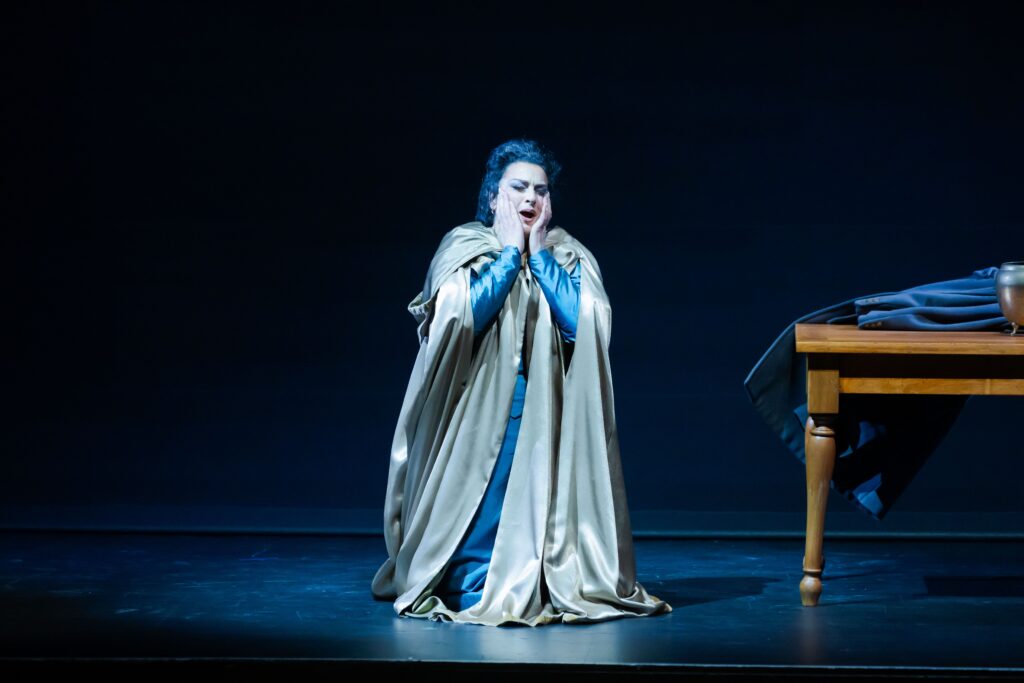
Nor, thankfully, were there any reservations in this regard from the beginning of Act Two onwards! In fact, it seemed as if I had woken from a dream and was regaling the appearance of the “true” Manon, as the “enchanteresse” composer and librettist had intended all along! From here, and right up until  the opera’s piteous final scene Edris’s Manon for me simply blossomed in terms of her appearance, with designer Rebecca Bethan Jones’s series of stunning costumes for the heroine readily and effervescently complemented the latter’s disarmingly self-assured beauty, further buoyed along by her determination to succeed in the world of the men seeking to “possess” her – whether in Act Two with des Grieux, reading his letter On L’apelle Manon (“Her name is Manon”), or, later in the same Act, her touching, if somewhat ambivalently coloured, Adieu, notre petite table (“Farewell, our little table”) salute to the couple’s apartment, with de Brétigny in the famous Act Three Gavotte  Obéissons quand leur voix appelle  (“Let us obey when their voices are calling”) on the promenade of Cours-la-Reine at festival-time, or, with des Grieux in the solemn precincts of St. Sulpice Church where she persuades him to forgive her faithlessness and give up his desire to “escape” into the world of prayer and service to others, and return to their past love, in her touching N’est-ce plus ma main? (“Is this not my hand?”). Edris’s Manon “grew” her character in voice and deportment along this journey, as singularly as did other doomed operatic heroines such as Carmen, or Katerina in Shostakovich’s “Lady Macbeth of Mtsensk” at their respective journeys’ ends –  Manon’s final moments with des Grieux were at once wretched and yet noble, coming to “own” her self-truths as well as expressing her love for him before expiring, her character portrayal a transfixing and compelling “moment” of radiant intensity, just as would a brilliant shooting-star flash briefly across the heavens towards oblivion.

Pene Pati, as Manon’s paramour, des Grieux, also grew his character from a degree of theatrical awkwardness at the couple’s meeting to a full-blooded, if somewhat over-wrought passion for his “enchanteresse”, one which the events of the story pushed to extremes of delight and despair, as the couple’s fortunes waxed and waned. The tenor’s complete absorption in the role was palpable at all times, both in vocal and on-stage terms – his singing of En ferment les yeux (“When I close my eyes”) to Manon  when together in the lovers’ apartment in Act Two, had that quality of “living value”, of converting the tones into genuine feeling – a mark of greatness! – then, at a different stage of the story, and with a rawer, more vulnerable quality, his aria in the St Sulpice Church – Je suis seule (“I am alone”) – in which he strove to free himself from thoughts of Manon  and devote himself to a life of service to others. As well, there was a treasurable fluency of physical interaction between Pati and his stage-partner (who happens to be his real-life partner as well, of course!) In an interview Pati amusingly – and touchingly – made reference to his and Armina Edris’s real-life relationship, commenting that it had its pros and cons on stage, though an advantage was that they “didn’t have to rehearse the romantic scenes!”  Nevertheless, the partnership seemed to draw from a kind of mutually-generated spontaneity, a naturalness of expression for both Pati and Edris, evident in what came across from both as a no-holds-barred musical and dramatic assumption, with the occasionally strained higher note indicative of the voices’ utter commitment to their roles. We were thus made to feel the singularity of the pair’s achievement in no uncertain terms throughout.

By no means, however, was our delectation confined to the efforts of the story’s leading characters – while not, perhaps an “ensemble” opera in the sense of Mozart’s “Figaro” which I had heard splendidly presented earlier this year in Wellington, Manon nevertheless requires a number of engaging and capable soloists to bring to life various other significant characters in the drama – and here, an entirely home-grown cast gave its audience a good deal of pleasure with its array of individual talents. As mentioned, beginning the stage action was one of New Zealand opera’s most distinguished and experience singers, tenor Patrick Power, as Guillot de Morfontaine, a roue (a French term for “a debauched, lecherous or immoral man”, usually of advanced years), one accustomed to announcing his presence (and his “entitlements”) from a position of wealth, here a robustly-voiced and double-sided figure of both comic fun and more insidious, vengeful intent, one whose rebuffal by Manon on various occasions in the story eventually brought about her downfall at Guillot’s instigation.

Bringing elegance, beauty and good humour to Guillot’s entourage were three of his consorts, elegantly-attired young actresses, probably in his pay for various kinds of amusements, Poussette (soprano Sarah Mileham), Javotte (mezzo-soprano Jasmine Jesson) and Rosette (mezzo-soprano Charlotte Secker) – the three voices alternated between individual observations and concerted comments relating to whatever was happening in the story, the effect at first delightful and amusing when the three chide Guillot for attempting to solicit the young Manon’s favours at his first meeting with her!  Manon envies them their beauty and elegance at first – but comes to share in their world of luxury and pleasure during subsequent scenes in the festival promenade on the Cours-la-Reine, and at the Hotel Transylvania’s gambling tables, until Guillot’s revenge on Manon and des Grieux puts a brutal and unforgiving end to their aspirations.

A further character makes a significant appearance in the Third Act and in various subsequent scenes – this was des Grieux’s father Le Comte des Grieux, who Manon obliquely questions regarding his son’s state of mind after their separation and who answers her with respectful forbearance. The Comte’s later exchanges with his son were given all the parental and societal authority one expected by Wade Kermot’s solemnly sonorous portrayal, doubly-vexed by his son’s reckless affair with Manon, and his subsequent “volte-face” desire to enter the Church. Each of the scenes directly involving father-and-son has a splendidly archetypal sense of timeless confrontation reproduced in all art-forms across the ages – and here, the ecclesiastical solemnity of the renowned Parisian church of Saint-Sulpice was the paradigmatic opposite of the gambling rooms of the Hotel Transylvania, where, in both instances the son was censured by the father – ruefully and philosophically in the privacy of the church, and then trenchantly and censoriously in the tumultuous latter scene in which Guillot wrought his revenge on both Manon and des Grieux, accusing them both of cheating and having them arrested by the police.

Throughout the course of this passionately exuberant and ominously fateful play of events and circumstances the Wellington Opera Chorus brought to the story’s unfolding a vigorously concentrated, chameleon-like series of tableaux, both dynamic, and in places wonderfully frozen in dream-like mise-en-scene “onlooker” stasis amid the vibrant energies, as if choosing to amalgamate momentarily in a “snapshot” with our own audience’s view. Whether on the vibrant promenade of Paris’s Cours-La-Reine or within the inner sanctum of St Sulpice’s church, the voices resoundingly conveyed the singular ambiences of each location, as did the ensemble’s purposefully focused choreographed movements. And while Guillot’s dancers in the Act Three “Ballet from the Opera” made (to the latter’s intense chagrin!) little or no impression upon the by then distracted Manon, their graceful performance suitably charmed the rest of us!

The opera’s final scene depicted the hero and heroine in the grip of Guillot’s revenge – des Grieux has been released from prison at the instigation of his father, but Manon has been sentenced to deportation as befalls “women of her kind”. Des Grieux plans to rescue Manon  and bribes a prison guard to free her, but it is too late, as, sick and exhausted, she dies in des Grieux’s arms on the road. Here, it transcended a popular view of opera  “a show in which the heroine dies at the end…”…. a powerful “across-the-board” commitment embodied by the conviction of the performance scene seemed for me to tap into a feeling of personal loss, of genuine grief, and even of a certain heroism regarding what people did and aspired towards on stage during the telling of Manon’s story. The moment’s power and capacity to convey genuine emotion spoke volumes, reflecting the quality of production in every sense, bringing to fruition something positive about every aspect of what took place both on and around about that stage over the evening.

It was a process which began with the very first orchestral note sounded from the pit, the music springing into warm, pulsating life from Orchestra Wellington, in the hands of conductor Romain Dumas, featuring both ensemble brilliance and energy along with the warmth and character of the numerous instrumental solos depicting or supporting the characters in the story. Set designer Michael Zaragoza’s distinctive stage sets from the beginning evoked both hints of the glories of the ancien regime, symbolic “archways” (the portals) through which characters such as Manon boldly, even recklessly, strode, but also an expression of what was termed “jouissance”, with its titular character in particular searching for a singular manifestation of delight beyond everyday pleasure. And lighting designer Paul O’Brien’s evocatively-lit scenarios reproduced the essences of the characters’ different surroundings and circumstances, none more enduring in the memory than the bleakness of the road to Le Havre, on which the luckless couple met their respective fates.

At the opera’s end there occurred a momentous standing ovation, a fitting tribute to the efforts of everybody concerned, and not simply to the “star duo” achievement of the two leads – this was a solidly-rounded acclamation of a performance which satisfied on so many levels , not the least of which how it “grew into” the drama as the evening went on. It was one definitely for the ages, then, and affirmed as such with ever-renewing confidence, energy and understanding throughout by this production – a presentation for Wellington Opera to be justly proud of.

At Last!  NZ Opera’s 2021 “take” on Mozart’s “The Marriage of Figaro makes it to Wellington

New Zealand Opera presents Mozart’s “The Marriage of Figaro”

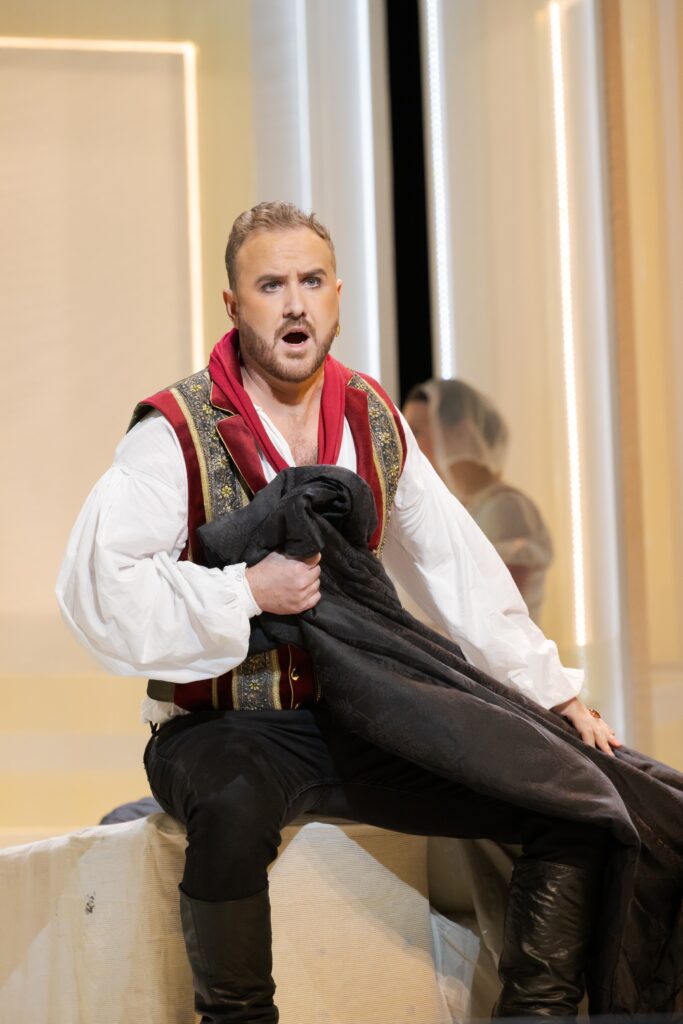
Sophie Sparrow as Susanna and James Clayton as Figaro – Photo: Stephen A’Court
Composer: Wolfgang Amadeus Mozart / Librettist: Lorenzo da Ponte
Based on Pierre-Augustin de Beaumarchais’ 1778 play “Le Nozze di Figaro”

Cast: Figaro – James Clayton
Susanna – Sophie Sparrow
Count Almaviva – Julien Van Mellaerts
Countess Almaviva – Felicity Tomkins
Cherubino – Cecilia Zhang
Marcellina – Kristin Darragh
Bartolo – Andrew Collis
Don Basilio / Don Curzio – Andrew Grenon
Barbarina – Sarah Mileham
Antonio – Joel Amosa
Bridesmaids – Barbara Graham, Charlotte Secker

Freemason Foundation New Zealand Opera Chorus
Orchestra Wellington
Conductor – James Judd

Chorusmaster Laureate – Michael Vinten
Principal Repetiteur and Continuo – David Kelly
Chorus Repetiteur – Bruce Greenfield
Director – Lindy Hume
Assistant Director – Eleanor Bishop
Set and Costume Design – Tracy Grant Lord
Lighting Designer – Matthew Marshall
Choreographer – Taiaroa Royal

St James Theatre, Wellington
Wednesday 17th June 2026

This was an opera audience that bubbled with pleasurable satisfaction long after the bringing down of the curtain at Wellington’s St.James Theatre on Wednesday evening earlier this week. NZ Opera’s eagerly-awaited (and at that time glowingly-received) 2021 production of Mozart’s “Le Nozze di Figaro” was meant to come on to Wellington following its season in Auckland that year – however, Covid intervened, forcing a last-minute Level 2 lockdown directive which put paid to Figaro’s performances in the capital ( Christchurch, which got three subsequent performances, was luckier than Wellington on that occasion).

Now, it was at last Wellington’s turn to enjoy director Lindy Hume’s and designer Tracy Grant Lord’s  much-acclaimed “take” of Mozart’s classic work, with the intervening years up to 2026 having inevitably “honed” 2021’s presentation, most obviously in terms of having a different cast bringing its own singular talents to the revival and recreating in the ever-grateful St James’ scenario a uniqueness of its own! I wasn’t able to see the 2021 “live-streamed” final Christchurch performance which NZ Opera had thoughtfully provided for its thwarted Wellington patrons, so (like many of the audience would have done) was able to come entirely freshly and all the more eagerly to this production!

I’d previously enjoyed a number of NZ Opera presentations directed by Lindy Hume, beginning with a stunningly visceral, almost “too-close-for-comfort” presentation of “Rigoletto”, as far back as 2012; and most recently – rather closer to the ethos of this evening’s subject – a “Cosi fan tutte” in 2023 which unsparingly brought out the ambiguities of human relationships between the leading characters with disconcertingly unease! So I was looking forward immensely to what insights Hume (and her inspirational designer for “Cosi”, Tracy Grant Lord) would uncover for us with this work – one that still resounds in my own memory as a precious “formative opera experience” from as long ago as 1971!

From the outset I was enchanted by the set and its all-encompassing “lit from within” qualities, the constant fluidity and variegation of both parameters and illumination taking us through as much a “journey of the imagination” as a series of spaces wrought with the work’s constant flux of both wilful interaction and judicious concealment in mind. Hume described the spaces created by readily moveable walls and doorways as suggestive of on-going change, as the opera’s action (a single day) unfolds its course from early morning until late at night and the characters move from scenario to scenario, firstly inside and later, outside the house, and in the garden. Tracy Grant Lord’s set and costume designs and Matthew Marshall’s lighting together simply enfolded us in a kind of timelessness about it all, recognisably as much a scenario from 200 years ago as in a large and modern country house, leaving us in the audience to “flesh out” whatever era from that time we could imagine through our own reactions.

What came across as forcefully here as in the 2023 “Cosi” production was the depiction of emotional disruption to societal order which both Mozart and his librettist Lorenzo da Ponte took pains to depict and examine – and while in both cases a semblance of that “order” was restored to the lives of the characters, much deeper undercurrents had been irreversibly plumbed by all the parties. And as Lindy Hume points out in her insightful notes in the programme, the women were the ones who instigated the changes in “Figaro”, presenting in no uncertain terms a new vision of a society being “remade”. Perhaps if Mozart had lived for longer, might he and da Ponte might have further pursued an operatic version of the original author Beaumarchais’s third play “La Mère coupable” (The Guilty Mother)? We will never know…..

Here in 2026 we were given everything envisaged by composer and librettist – there was comedy, intrigue, anger and pathos in this presentation, with all of the characters at one stage or another revealing or disporting strong and varied émotions, subject in places to rapid change, and instigating a kind of volatility associated with societal disturbance and disruption, either of authority or of deep feeling. Whether in a kind of soliloquy, or accompanied by interaction, these different expressions were wholeheartedly conveyed, in recitative or in set pieces, solo or concerted, with every character suitably “enlarging” her or his personality in the process.

Julien Van Mellaerts as the Count  – Photo: Stephen A’Court
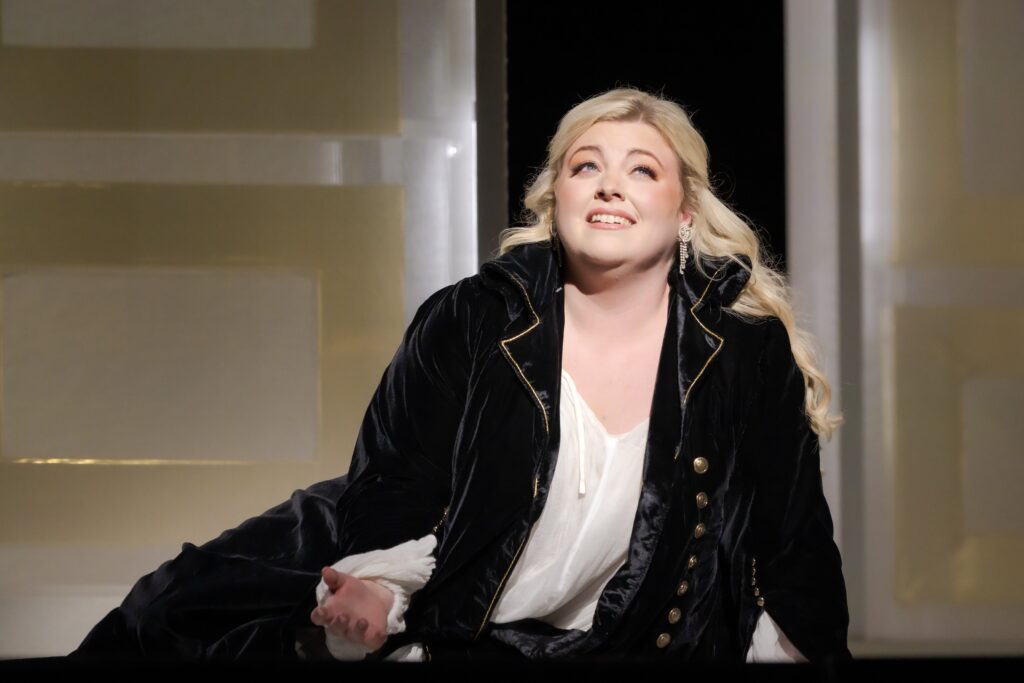

Felicity Tomkins as the Countess – Photo: Stephen A’Court

In that sense, the work was a perfect “ensemble” piece, whose dramatic coherence rested upon upon teamwork, with timing and balance adroitly kept on the rails by conductor James Judd, with every portrayal, including the lesser characters, prospering in partnership with others.  As Figaro, James Clayton’s robust baritone, and Sophie Sparrow’s ever-mellifluous soprano as Susanna brilliantly encompassed their pairing’s ebb-and-flow dynamics besides keeping on the boil their various parallel relationships with co-conspirators and adversaries – everything had an inventiveness and volatility which kept the audience guessing as to “how”, regardless of knowing “what”. Figaro’s and Susanna’s upper-class equivalents, the lascivious Count Almaviva (Julien Van Mellaerts)  and his long-suffering Countess (Felicity Tomkins) were dynamic adversaries/eager collaborators in terms of their own relationship, Van Mellaerts with his quick, flexible baritone the perfect foil here for Tomkins’ sympathetic and warmly-appealing soprano.

Kristin Darragh (Marcellina), Andrew Collis – front (Bartolo), and Andrew Grenon (Don Basilio/Don Curzio) – photo:  Stephen A’Court
Into this quartet of conflict came the vengeful pairing of Marcellina and Bartolo, each with an axe to grind regarding the luckless Figaro – Kristin Darragh was a gorgeous, fulsomely acquisitive Marcellina, here in tandem with the initially less dynamic Bartolo of Andrew Collis, whose decidedly oldish portrayal did, however, manage to gather some momentum during his “La vendetta” aria – and together the pair’s subsequent Act Three rediscovery of their own parentage of Figaro himself got the biggest laugh of the evening – in a production already replete with humour, a great moment!


Sophie Sparrow (Susanna) and Cecilia Zhang (Cherubino) – photo: Stephen A’Court

Diverting opposites were mezzo-soprano Cecilia Zhang’s quicksilverish, testosterone-ridden pageboy Cherubino, her voice and presence replete with pubescent urgings (in one instance graphically suggestive via an item of the countess’s clothing!), and Andrew Grenon’s delightfully first-up artless Don Basilio, whose drollery effectively (if only temporarily) masked his character’s true oily nature, bent on mischief and mayhem at whomever he’d been primed to target. Grenon here did an adroit double-act as Don Curzio, the Judge summonsed by Marcellina to formalise the intended marriage between her and Figaro. There was also Sarah Mileham’s Barbarina (a servant-girl) played innocently and sweetly in her defence of Cherubino against the Count, and adroitly-voiced in her “notepin” aria, alongside two effective cameos from bass-baritone Joel Amosa as the slightly drunken and suitably affronted gardner, Antonio.

The chorus’s brief but deftly-timed festive entrances overlaid the Count’s scheming with suitably rustic-sounding innocence and charm, besides providing an atmospheric backdrop of « daily task » activity just outside and around most of each acting area – an inspired production touch! All of this was buoyantly propelled by James Judd’s variegated direction of some superb orchestral playing by the Orchestra Wellington players – from the stirring strains of Cherubino’s “off to the battle” military pomp and vigour, through the gaiety of the rustic celebrations to the tenderness of the music for the Countess’s heart-rending moments of amatory sorrow, and, at the end, relishing and delivering wholeheartedly the opera’s rejuvenating message of hope for the human condition in the best universal sense via Mozart’s glorious music.


.

Days Bay Opera’s setting and Bizet’s “Pearl Fishers” an indelible operatic combination

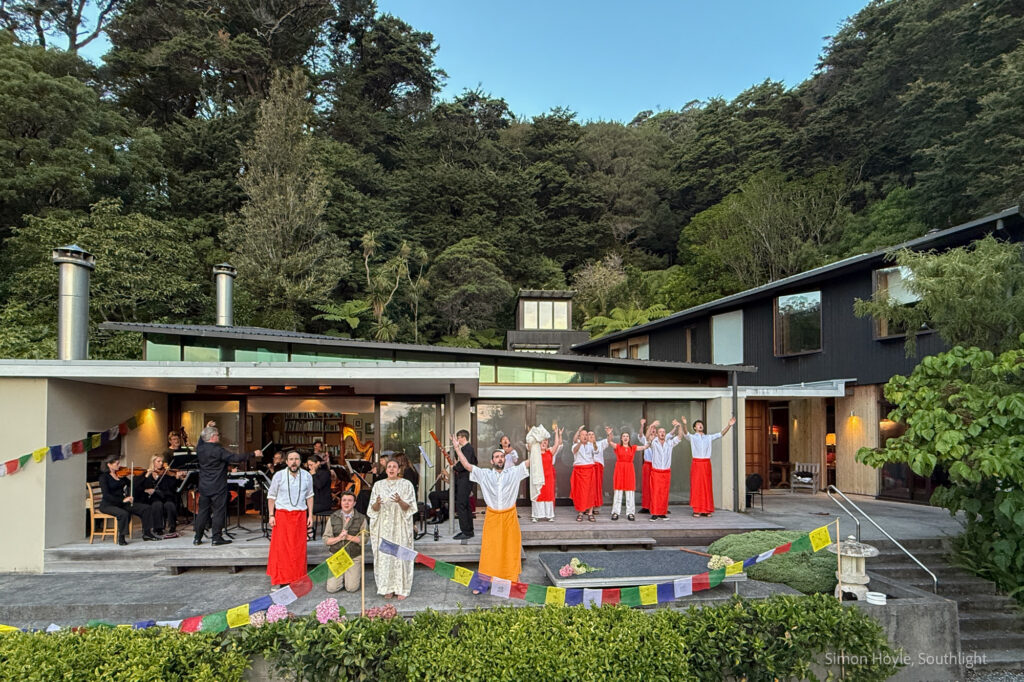
Days Bay Opera Company – BIZET – The Pearl Fishers  February 2026  –  photo: Simon Hoyle (Southlight)

OPERA IN A DAYS BAY GARDEN
Georges BIZET – Les Pêcheurs de Perles – Opera in Three Acts

Cast: Zurga – Kieran Rayner (baritone)
Nadir – Zachary McCulloch (tenor)
Léila – Madison Nonoa (soprano)
Nourabad – Joshua Jamieson (bass)
Villagers – Francesca Fagan, Lizzie Summers, Jo Pegler,
Charlotte Secker, Elias Nguyen, William McElwee,
Charle Rainey, Matthew Terry, Joseph Clinton

Director: Rhona Fraser
Conductor: Howard Moody
Rehearsal Pianist: Catherine Norton
Costumes: Ishbel Mclachlan
Refreshments: Seresin Estate Wine
New Zealand School Of Music

Orchestra: Leader – Anne Loeser
Kristina Zelkinska / Ursula Evans / Janet Armstrong (violins)
Victoria Janecke (viola)
Eleanor Carter (‘cello)
Malcolm Struthers (double bass)
Michelle Velvin (harp)
Karen Batten / Jen Vaughan (flutes)
Finn Bodkin (oboe)
Romola Smith (clarinet)
Tor Chiles (bassoon)
Ben Whitton (timpani/percussion)

Canna House, Days Bay, Wellington
12th, 14th, 15th February 2026

Opera in a Day’s Bay Garden is a venture begun in 2010 by Wellington singer, producer and director Rhona Fraser, at her family’s verdantly-appointed native-bush-surrounded residence “Canna House” on the eastern shores of Wellington’s harbour. Its productions have been delighting Wellingtonians and enthusiasts from further afield ever since, even earning the sobriquet of “New Zealand’s Glyndebourne” from a commentator at one point, if on a somewhat more intimate physical scale than that of the world-famous Lewes, East Sussex Festival Opera UK location.

My own first experience of a Days Bay Garden production was in 2012 with Handel’s Alcina, the story’s “magical island” setting fitting the harbourside venue like a glove. Apart from a mere handful of instances since, I’d been prevented by circumstance from attending more recent productions, so it was a particular joy to return for Bizet’s enchanting youthful work Les Pêcheurs de Perles  (“The Pearl Fishers”) – one, like Alcina, with a scenario eminently suited to the Days Bay setting’s location.

The opening night performance was in the capable hands of conductor Howard Moody, a Days Bay stalwart from previous occasions, here joining with orchestra leader Anne Loeser in curating every note to telling effect. The players did a splendid job, belying their reduced numbers with on-the-spot accompaniments, and holding their own against even the continuous cicada-accompaniment ambiences from the bush-clad surroundings – I enjoyed many a felicitous instrumental detail, and particularly recall the bassoon’s adroit handling of the melody normally given to the horn introducing Leila’s Act 2 Cavatina “Comme autrefois”.

Each of the three principal singers were Day’s Bay “veterans” who had honed their youthful skills in previous productions, here returning from further offshore studies with the increased confidence and flair born of experience. They were supported by an attractively youthful chorus who brought energy and purpose to their singing, making up for lack of numbers with focused tones and well-disciplined ensemble (particularly impressive in moments when the groups’ antiphonal exchanges from different parts of the garden unerringly “found one another” to mellifluous effect!

Together these forces brought out a performance which I thought most satisfying, with  each soloist “sounding” their character’s dramatic and musical raison d’etre – baritone Kieran Rayner was a consistently sonorous Zurga, splendidly conveying the character’s plethora of conflicting emotions regarding his friendship/rivalry with his old friend Nadir (here drawn with beautifully focused tones throughout by tenor, Zachary McCulloch). Of course, everybody awaits in breathless anticipation the opera’s great Act One tenor/ baritone duet Au fond di temple saint, and in which both singers here were, I thought, ideally-matched in individual  timbres and and intensities. Elsewhere (apart from a slight lessening of tone at the very top of his range) Rayner vividly conveyed  Zurga’s contrasting comradeship and anguished jealousy regarding his friend Nadir’s reawakened passion for Léila, the beautiful Priestess.  For his part (and to my very great pleasure) McCulloch’s delivery of the Romance “Je croix entendre encore”  was so very beautifully and sensitively phrased  – comparing favourably with the many versions I heard on recordings and on various on-line videos  – what a treacherous piece for tenors it can be!). A small point was that I wanted him to take his hands out of his pockets a bit more often when singing!

Madison Nonoa was Léila, the mysterious virgin Priestess  whose reappearance in the opera  reflames old passions between Zurga and Nadir. She looked and sounded the part admirably, though a somewhat recalcitrant face-concealing veil seemed to give her more trouble than security at times –  I also felt her very first entry would have been helped by some kind of marked-out or unlifted focal-point she could have made her own and which would have helped create the necessary “Priestess” aura.  Her enchanting singing’s softer strains could in places hardly be registered in those vast out-of-door spaces, though her voice for the most part sounded wonderfully at ease with the role’s stratospheric vocal quality – and she was a suitable match for bass Joshua Jamieson’s capable and sonorous Nourabad  (in the small but effective part of the High Priest  assigned to supervise her activities as “guardian spirit” for the boats of the pearl fishermen).  But the need for a kind of “shrine” for her was accentuated when Nadir crept into her presence and sat beside her, the pair then obscured by rows of flags along the stage-front, and whose decorative effect became more distracting than festive.

Despite the production offering no surtitles, whose presence would have finetuned some of the story’s detailing, the drama’s overall impact was readily conveyed by the singing and playing, the venue allowing its audience a proximity to the sound and action of it all, a kind of involvement which intuitively engaged one’s emotions – even Nonoa’s recalcitrant veil couldn’t distract from her character’s allure and fascination.

The production with its clean-cut, orange-and-white, almost religious cult garb for the indigenous islanders had a curious “updated” aura about it, most noticeable when the villagers were enjoined by Nourabad to construct a “burning at the stake” kind of pyre to which they added lashings of what looked like petrol, before tying up the traitorous Nadir and the impious Léila to the structure, intending to put a grisly end to them both.

We were fortunate with the weather, blessed by clear, settled skies on the opening night  – besides the enchanting “cicada chorus” that accompanied the singers the only other natural  distraction I noticed was a briefly annoying airborne “bug” which occasioned an involuntary “swat” from the tenor during the famous duet, which, if anything, intensified the ambience of  the performance’s energies!. As the forecast for the oncoming weekend gradually deteriorated director Rhona Fraser cannily brought forward the timing of the final day’s performance by way of thwarting the projected onset of rain,  which strategy seemed to work, and the show went on. Though not exactly a replication of Thursday evening’s al fresco splendours the worst was adroitly avoided and honour was satisfied – full marks to Rhona Fraser AND Days Bay Opera!

NOYE’S FLUDDE – Delitable in alle wise and a ful gret joie!

Wellington Cathedral of St.Paul presents:
BENJAMIN BRITTEN – Noye’s Fludde  – Opera in One Act (based on the 15th-Century Chester “Mystery” Play)

Stage Director: Jacqueline Coats
Musical Director: Michael Stewart
Production Manager: George O’Donnell
Stage Manager: Boo Pantoja-Frost
Stage Hands: April and Cara Tan

Cast: Robert Tucker – Noye
Maaike Christie-Beekman – Mrs Noye
Joshua Jamieson – Voice of God
Alexander Stewart – Sem
William Edgecombe – Ham
Blythe Dennison – Jaffett
Eleanor Stanton – Mrs Sem
Zoe Stewart – Mrs Ham
Fiona Liu – Mrs Jaffett
Gossips – Margaux Astrid Detera, Alice Carter, Varsha Ranganathan.
Mischa Thomson. Shenaya Pieries
Phoebe Cassin  – Raven
Ruby Millen-Ingram  – Dove

Orchestra: Solo String Quintet: Christine Wang, Emma Barron (violins),
Sophia Acheson (viola), Eleanor Carter (‘cello)
Malcolm Struthers (double-bass)
Piano Duet:  Kathryn Mosley, Max Toth
Solo Recorder: Kamala Bain
Principal Trumpet: Mark Carter
Organ:  Tom Chatterton
Principal Percussion: Laurence Reese

Handbell Choir of Samuel Marsden Collegiate School (director: Marian Campbell)

Children’s chorus and instrumentalists

Wellington Cathedral of St.Paul,
Molesworth St, Thorndon, Wellington
Friday 17th October 2025

“Delightful in every way” was the unsolicited comment made to me straightaway by a fellow-audience member after we’d finished enthusiastically applauding the efforts of the singers and instrumentalists at Wellington Cathedral of St.Paul earlier this evening in a performance of Benjamin Britten’s one-act opera “Noye’s Fludde”.

My first long-ago encounter with this work “live” was as a performer – as a percussionist in the orchestra in a Palmerston North church – and for me there have been a handful of occasions since, though always as an audience member.  One of these  took place in the actual heart of Benjamin Britten country, when I attended the Aldeburgh Festival of 1994! – and how disappointing amid all that excitement then, when the festival organisers that year chose for whatever reason not to follow the composer’s directive that Noye’s Fludde be always performed in a church, by staging the opera in the Maltings concert-hall, famed for its acoustic, but as untheatrical a venue as one could get, certainly to the work’s disadvantage!

The much earlier excitement of taking part in that first performance has never left me; but this evening’s most recent encounter had a similar kind of participatory joy which seemed to include everybody , one which has pushed sleep for the moment  into the background while I savour once again the sheer, undiluted engagement of it all, singers and players inhabiting and filling up the shared physical spaces with gloriously  tangible sounds. And, of course the Cathedral’s generous acoustic responded readily to our own audience efforts vis-à-vis the composer’s directive that we raise our own voices in three of the hymns whose exhortations became part and parcel of the famous story.

Along with the acoustic, the cathedral’s spacious physical surroundings helped define the epic nature of Noye’s and his intrepid companions’ undertaking, via a spectacular backdrop screen depicting aspects of the “Fludde”, adding a truly visceral component to the proceedings, a “window” of the devastation wrought upon the outside world that those in the “shippe” had been spared – Matthew Lawrence’s animations were in places splendidly palpable!  Umbrellas and tarpaulins added to the flavour of director Jacqueline Coats’s choreographing of the perils of the voyage,  aptly emphasising both the physical stresses and anxieties of the shippe’s company, as did our joining in with the singing of “For Those in Peril on the Sea” throughout the weather’s most threatening moments!

Earlier in the story we had relished the gathering of all the “Beastes” wearing all kinds of masks, and summoned from all different parts of the Cathedral by bugle calls, running up to fill the vessel whilst singing their “Kyrie eleisons” – delightful! Though the venue’s spaciousness told against the clarity of the younger voices’ various solos at times, all fronted up and delivered with committed expressions and gesturings – and we had in our generously-appointed programmes practically all of the words (an inspired touch, and with enough available light for us to be able to read and keep track of the essential message!)

As diverting in a completely different way was the interaction between Noye and his recalcitrant wife, who refused to board the boat despite the entreaties of her family members, preferring the company of her “gossips”, and their fondness for carousing together, a situation solved when the “gossips” were graphically swept away by the floodwaters and the sons manoeuvred their mother on board just in time! Robert Tucker as Noye and Maiike Christie-Beekman as Mrs Noye were each superbly dramatic and sonorous-voiced in conflict, Noye endless pleading, and his wife finally capitulating after delivering a resounding slap to her husband’s face!

Right at the work’s very beginning one’s sensibilities were galvanised, with reverberating orchestral chords magnificently bolstered by the percussion – we ourselves felt almost fearful amid such an onslaught while singing “Lord Jesus think on me”! – one which then led to the voice of God magnificently rolling about the vistas, impressively intoned by Joshua Jamieson (not visible from where I was sitting, but an all-pervading presence), his utterances strongly underpinned by timpanist Larry Reese and his percussive cohorts! Then, at the work’s other end were the manifold beauties of a newly-redeemed world, coloured by memorable orchestral contributions, lump-in-throat delicacies of colour and texture for us to sit and wonder at – and how resonant the characterisations of the two birds sent by Noah to spy out the land! –  Phoebe Cassin’s Raven with deliciously slinky ‘cello tones from Eleanor Carter’s ‘cello, and Ruby Millen-Ingram’s dove voiced and danced by Kamala Bain’s dulcet recorder-chirpings, each one supported by Kathryn Mosley’s and Max Toth’s nimble piano-playing.

It all came together with the emergence from the shippe of the intrepid survivors, and the appearance of the rainbow on the screen – the breaking out of repeated “Alleluias” amongst the singers, accompanied by the Samuel Marsden Collegiate Handbell Choir’s instruments, along with those aforementioned redemptive orchestral sounds from the entire company, was simply transformational, as the composer would have intended, the spaces alive with hope for a better world, which, of course couldn’t be more apt in humanity’s presently parlous state around the globe, and to which we were all able to give tongue with our final bugle-accompanied hymn verses.

Special mentions, of course, are due to director Jacqueline Coats for bringing out so effectively and tellingly those essential inclusive elements of the presentation that treated its audience as true participants rather than mere spectators (something I felt manifestly lacking all those years ago at Aldeburgh itself!). And instrumental in the application of these goals was the musical direction of Michael Stewart, both as a kind of affable Master of Ceremonies and as a committed director of the musical and dramatic flow of the presentation. Both of these people brought out what I thought were the most positive aspects of the venue, enabling the work itself to speak well-nigh unimpeded and enhance its relevance for today. Goodness knows our humanity needs such things now as much as it ever did, both for our sustenance and positive continuation.


The Monster in the Maze – putting community on the stage

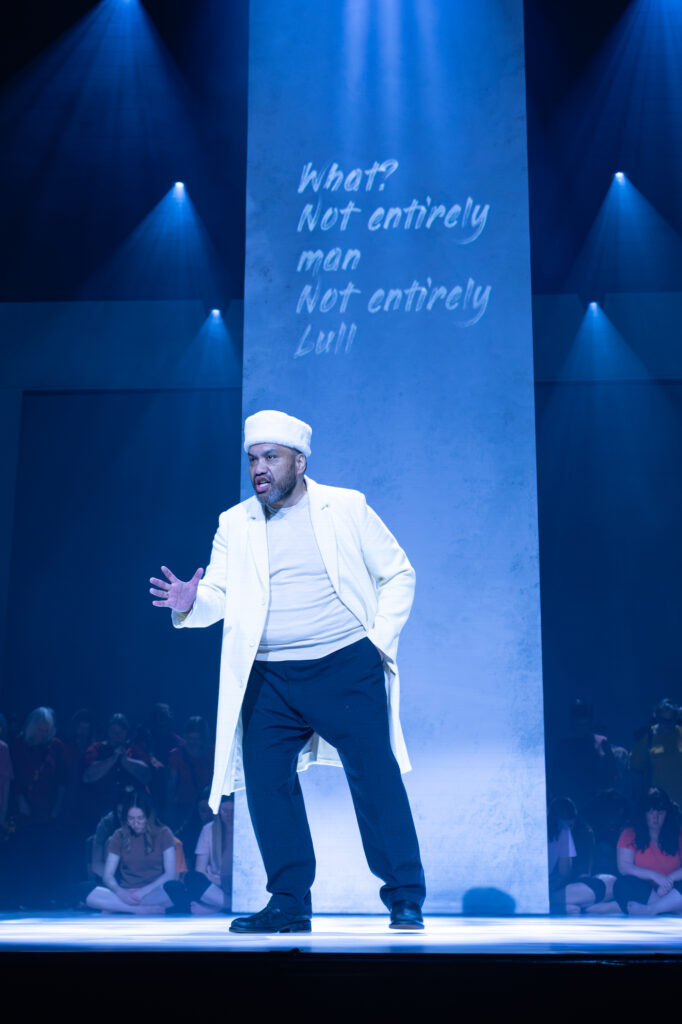
Ipu Laga’aia as Theseus, Sarah Castle as his Mother, and Joel Amosa as Daedalus with some of the community chorus participants   –   photo, Emma Brittenden
New Zealand Opera presents:
The Monster in the Maze by Jonathan Dove, libretto by Alasdair Middleton.
New Zealand Symphony Orchestra, community singers and musicians
Cast: Maaka Pohatu – King Minos of Crete
Ipu Laga’aia – Theseus
Sarah Castle – Theseus’s Mother
Joel Amosa – Dadaelus
Conductor: Brent Stewart,
Director: Anapela Polata’ivao ONZM
Creative Producer: Stacey Leilua
Choreographer: Petmal Petelo
Production and Lighting Design:
Filament Eleven II – Rachel Marlow / Bradley Gledhill

Friday 12th September, St James Theatre (Wellington)
Until September 19 and 20 (Auckland).

Review by Peter Mechen (Middle C)

I took my six-year-old nephew to the St James Theatre in Wellington to see “The Monster in the Maze” – his first-ever opera experience! Of course, I was as excited as he was, expecting something completely and fascinatingly different to the usual operatic experience afforded by works such as “Carmen”, “The Magic Flute”, or “La Traviata”. For one thing, this production places as much importance upon its own unique style of presentation as it does on the story and its characters – the people on the stage ranged from opera “professionals” (a few members of the New Zealand Opera Company) to amateur singers, mostly young people who make up most of the 150-plus chorus members.

For another, the story is a simple, basic version of the age-old and well-known myth about the Greek hero Theseus and his plan to kill the terrible half-man, half-bull Minotaur who lived in a fearful maze called “The Labyrinth” on the island of Crete. And for a third, the situation which the opening of this production presents has resonances which are anything but distant mythological tales confined to the never-never land of fantasy – the cruel and barbarous regime of the King of Crete and his murderous plan to subjugate the Athenians he has just conquered bears an almost sickening likeness to the present genocidal situation  in the Middle East being inflicted upon the Palestinians in Gaza by their remorseless Israeli oppressors.

Maaka Pohatu as Minos, King of Crete    –   photo, Emma Brittenden
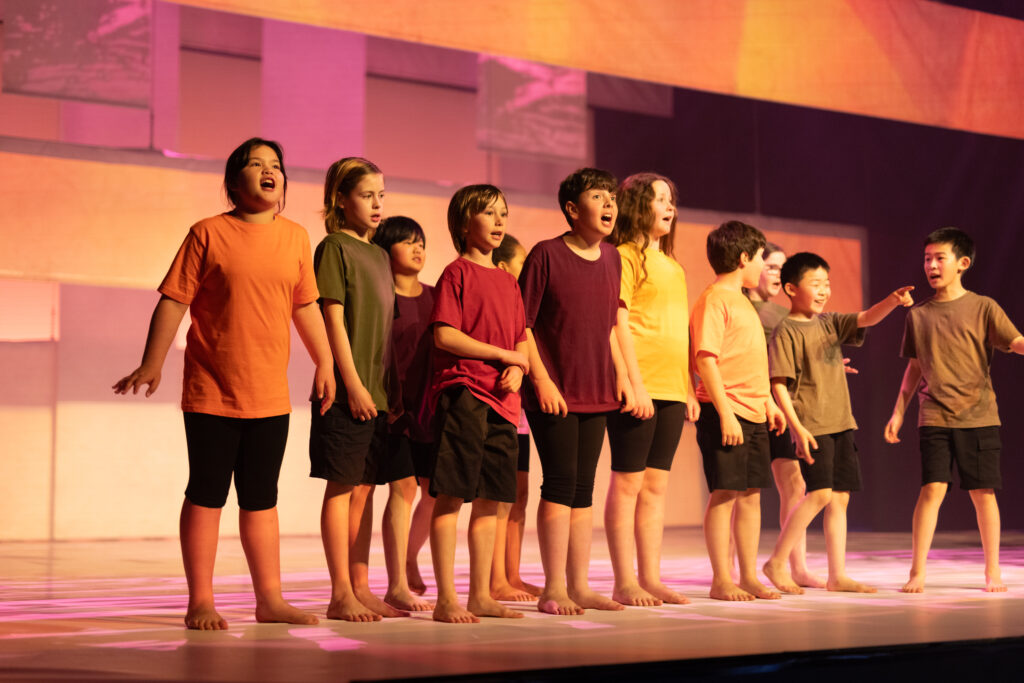
In fact the opening scene of the production had enormous theatrical weight and dramatic menace, thanks to the spine-chillingly forceful energies of Maaka Pohatu (King Minos of Crete) who totally dominated the stage with his delivery of the words (clearly spoken rather than sung) and his brutally boastful presence. He was actually given surtitles of a kind inscribed on the archways, somewhat ironically, as he was the one character least in need of them for his intentions to be conveyed to his riveted audience! For this reason I found a good deal of what the other main characters sang hard to decipher – always a problem with opera, even when  in English! I thought surtitles should have been continued throughout (though certainly NOT on cell-phones, as was suggested at one point – why would we go to opera only to have to read things on our cell-phones?)

Such was the power of Pohatu’s delivery of the pitiless proclamation we were stunned, almost as if we ourselves were under the King’s sway along with the Athenians. Certainly, the scenes involving the Athenian children required by Minos to be sacrificed (either every seven or nine years, depending on which version of the myth one reads!) by being put on a ship to Crete bound for the labyrinth in which they will be fed to the Minotaur had enormous poignancy – the children’s youth, beauty and innocence touching on feelings of pity, dread and horror, all exacerbated by a sense throughout the theatre of all-pervading “involvement”.

We were, of course, all buoyed up by the arrival of Theseus (variously lyrical and heroic of voice, and clear of diction) wanting to know what was “up”, and after being told the situation, determinedly announces that he will go with the children and with his machete put an end to the Monster! His mother (Sarah Castle) was, of course aghast at losing her son but Theseus was adamant – he will save Athens and its people from this oppression!

The set design was wonderful, broad-brush-stroke stuff, beginning with dark, starkly-lit pillars evoking King Minos’s forbidding palace as the king issued his proclamation from its depths, then withdrawing the pillars in favour of horizontal beams which rose and fell as requiring opening or more constricted spaces, then criss-crossing with the pillars when the children accompanied by Theseus entered the boat to take them to Crete.  The ship’s progress was then effectively and atmospherically “plotted” on a series of horizontals along which the image “sailed”, slowly diminishing in size, the watchers sadly dispersing, led by the Mother, after the ship leaves.

As the ship approached Crete, we saw some of the inhabitants waiting, cast here as a quasi- oppressed group of people, darkly, almost militaristically dressed in near-combat attire, moving about a dim and dismal scenario, enacting a kind of reception-party. The children and Theseus disembarked, the set forming a kind of criss-cross matrix of imprisonment with a small entrance, through which the visitors passed – despite the walls, portals and columns being stylised, straight-sided matrices they more-than- readily invited the audience’s individual imaginations to flesh out their dramatic reality as the  beginnings of the labyrinth. Unexpectedly, the intended victims then encountered a fellow captive, Daedalus (Joel Amosa), the actual designer of the Labyrinth (in some versions of the legend, was himself lost in the intricacies of the maze) – whatever the mythic detail, the character he was no friend of King Minos, and so helped the story’s hero to find his way to the Minotaur, a manifestation, incidentally, whose appearance was not quite what one might have expected….

As his fearful companions hid behind various outcrops or in secluded configurations, Theseus probed deeper – the colours became increasingly lurid (the lighting scenarios were magical in their evocative power) and the appearance on the stage of what seemed like an infernal band of brass musicians was a masterstroke of theatre, especially as the tension was mounting with the viscerally-frightening prospect of the Minotaur’s arrival! – to a blaze of rasping tones from the musicians the hero was confronted with his invisible but incredibly “present” enemy, on whom he fixed his gaze, while slashing and jabbing with his machete! – we were terrorised and fearful, convinced that Theseus was fighting for his life against an enemy we couldn’t actually see but KNEW was there! Theseus companions sang and shouted encouragement as the hero gave his utmost to the fray. By this time the lighting had soaked the setting’s textures in blood from which Theseus arose, machete aloft and triumphant! The devil might be in the detailing, but this unseen devil was now no more, and the way was now open to freedom, release and continuation of life! How more cathartic a feeling could have been conveyed than this one? It remained only for the sadistic Cretan King Minos to express his anger, grief and despair at the destruction of his plan for total subjugation of the Athenian people, thanks to the heroism of Theseus, who was triumphantly reunited with his family and his people!

Community chorus participants in “Monster in the Maze”  –    photo, Emma Brittenden
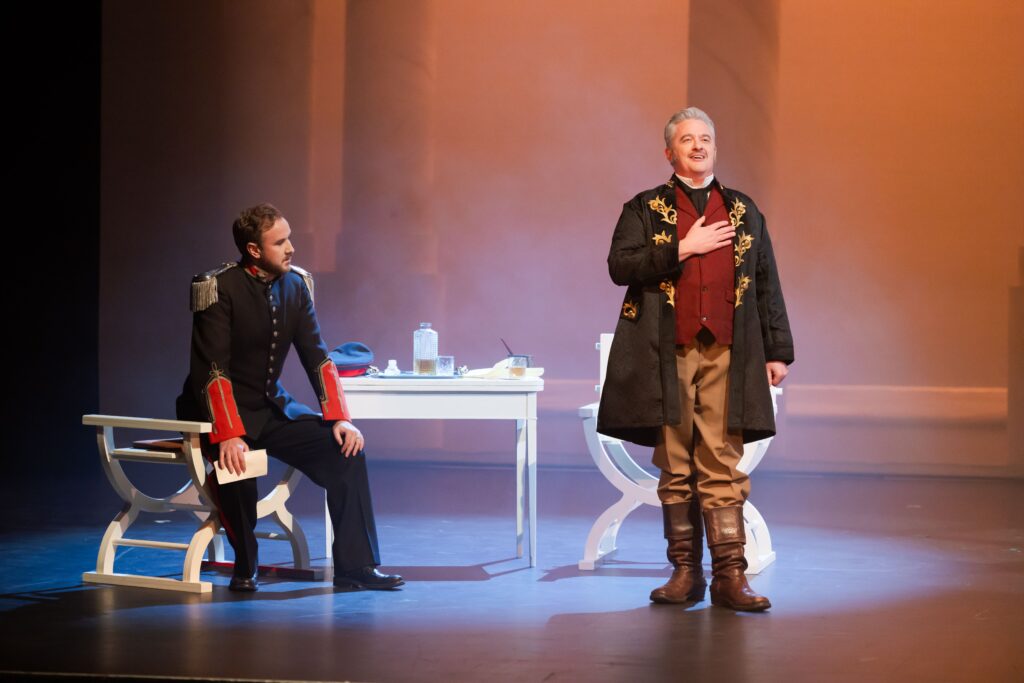
More, much more, than a splendid depiction of heroism overcoming tyranny, this production spoke for a kind of power of involvement obviously leading up to and throughout the story which, by the end seemed to have resonated with every single person in the theatre. For those of us who were regular opera-goers the unbridled exuberance we found ourselves witnessing on the stage among performers and enablers of the production seemed no less than intoxicating! And people on either side of me in the audience whom I spoke with immediately afterwards (none regular opera-goers) seemed overwhelmed by what they had just seen and been themselves caught up with! As for my six-year-old nephew – he was most gratifyingly entranced by the whole show!

It made memorable the moment when everybody involved with the production, from director Anapela Polata’ivao, creative producer Stacey Leilua, choreographer Petmal Petelo, and the Filament Eleven II design team of Rachel Marlow and Bradley Glkedhill,  together with conductor Brent Stewart and his onstage/offstage musicians, gathered together on the stage at the end to unite with the audience to enjoy the fruition of those expressions of mutual appreciation and communal achievement which in the words of NZ Opera General Director Brad Cohen, come from experiencing storytelling through the power of the human singing voice.


“The Phantasmagoria is constant!” – Ravel approves his magical new 1925 opera!

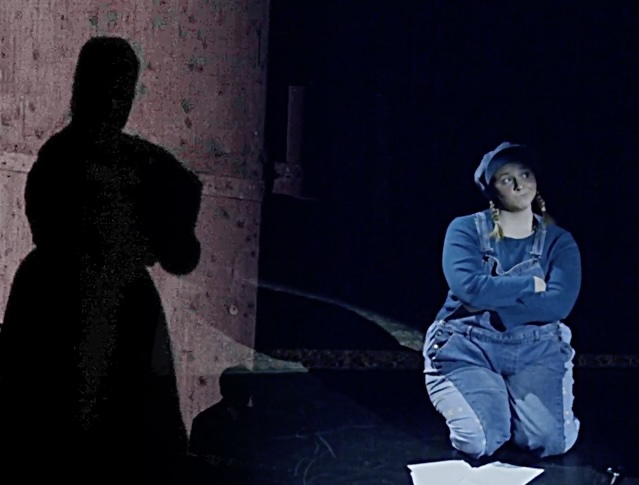
Charlotte Secker as the Child. and Francesca Fagan as the Mother (shadow)

MAURICE RAVEL  –  Opera in One Act – “L’Enfant et les Sortilèges”
(libretto by Sidonie-Gabrielle Colette)
Students and staff of Te Kōkī / New Zealand School Of Music
Victoria University of Wellington / Te Herenga Waka
– in association with Toi Whakaari / NZ Drama School

Sara Brodie – Director
Therese Hanaray – Assistant Director –
Martin Riseley – Conductor and Head of Strings
Kathryn Mosley – Chorusmaster and Head of Collaborative Piano
Grace O’Brien – Set and Costume Design
Alex Fisher – Lighting Design
Brooklyn Saunders – Production Manager\

Cast and Musicians
Charlotte Secker  –  The Child
Francesca Fagan  –  The Mother, the Cup
Charle Rainey –  The Armchair, the Male Cat
Greer McCarthy – The Bergère Chair
Joseph Clinton – The Grandfather Clock, a Tree
Elias Nguyen – The Teapot, the Arithmetic Teacher, the Tree Frog
Chu My Duyen – The Fire, the Nightingale
Cadence Chung – A Shepherd, the Dragonfly
Eve Parker-Groves – A Shepherdess, the Bat
Emilia Gray – The Princess
Eunice Ng – the Female Cat, an Owl
Tiaki McArdle – the Squirrel

Members of Te Kōkī Orchestra, New Zealand School of Music

The Hannah, Hannah Playhouse, Cambridge Terrace, Wellington
Saturday 6th September, 2025

Maurice Ravel’s only operatic ventures during his remarkable compositional career were two smaller-scale works, written and performed a number of years apart – firstly, in 1911, came the brilliant, tongue-in-cheek satire “L’Heure espagnole” (The Spanish Hour), and then (in the wake of the Great War) succeeded by an ostensibly less “adult” but more deeply-felt creation, “L’Enfant et les Sortilèges” (The Child and the Magic). The latter is a work whose explorations of a child’s world don’t spare the listener occasional moments of cruelty, darkness and sorrow touched upon in places by the story. The original idea for the scenario came from the author Colette, whose first intention was for the story to be told in the form of a ballet. Ravel, however, had been persuaded that an operatic successor to “L’Heure espagnole” was needed, and had meantime been stimulated by the “new wave” of musicals and revues with new dance-forms by composers such as Gershwin. As the new work took shape so too did the composer’s enthusiasm for these “operetta-style” features take wing, to the point where Ravel could enthusiastically describe preparations for the first performance in Monte Carlo in March 1925  with the words “…an extraordinary production – the roles are numerous and the phantasmagoria is constant!”

This 2025 realisation was co-ordinated by Jenny Wollerman, Head of Classical Voice at Wellington’s Te Koki School of Music, bringing together students and staff members from both the Music School and Toi Whakaari (NZ Drama School). It joins a number of memorable productions by the Music School over the years, with, to my mind  Benjamin Britten’s “A Midsummer Night’s Dream” and Verdi’s rarely-performed “Il Corsaro” readily resonating in my memory still, as I write this.

Director Sara Brodie’s production at “The Hannah” most appropriately celebrated the work’s one-hundredth birth-year, echoing triumphantly the composer’s enthusiastic description of the original event with its “continually and intimately-mingled” dancing on the part of the singers. She made splendid use of the venue’s multi-levelled and -entranced features, encapsulating the audience within bevies of singer/actors on two sides and musicians on the remaining two, so that we felt at times as much participants in as observers of the story’s by turns dream-like, quixotic, unpredictable and heart-warming expositions.

Straightaway, Ravel’s innocently sinuous Prelude drew us into the dream, a kind of twilit world of light and shadow, suggesting the “old-fashioned Normandy country home” of Colette’s setting, complete with armchair, fireplace and Grandfather clock – even the shadow cast by the offstage character of the Mother effectively reinforced the “old-world” atmosphere and its sense of well-established order.

These things were, of course then shattered, literally, to pieces, firstly by the disobedient Child’s tantrums in destroying or disabling almost everything she could find in the room, then by the fantastic “coming to life” of many of these same objects, each bent on demonstrating to the Child her wilfulness, selfishness and even cruelty in carrying out her unthinking acts of destruction and unkindness to both creatures and objects that co-existed in her world.

Even when escaping to the garden, the Child’s relief was short-lived, as the trees themselves confronted her with the “wounds” she had subjected them to, her guilt intensified further by a dragonfly whose mate she had killed so as to pin to a wall, and also a squirrel she had enclosed in a cage. Overcome by shame, she called out for her Mother, infuriating the creatures, who then attacked her – in the subsequent melee, a squirrel was wounded, and the remorseful Child confounded the creatures present by dressing the squirrel’s wounded paw. Moved by this change of heart on the part of their previous tormenter, the animals and trees then sang “Il est bon, l’enfant, il est sage” (The Child is good and wise”), at the end of which she was reunited with her (still offstage) Mother.

The power of emotion in Ravel’s music never ceases to amaze me, as here – above all else, it’s the depth of sadness in the music, including that expressed by the Child for her much-loved but now-forsaken “Princess” which indicated the composer’s capacity for depth of feeling behind the accustomed “coolness” of the mask. But more bleakly and tragically we shared the Child’s confrontation with her part in the dragonfly’s loss of its mate and the squirrel’s equally heart-rending loss of its freedom, moments which cumulatively “seeded” the animals’ final forgiving chorus to produce a lump-in-the-throat effect which for me flooded those concluding ambiences, and was here achingly, almost cathartically realised by the singers and players.

The set’s atmospheric qualities buoyed up every scene, sometimes amusingly, sometimes poignantly  and sometimes startlingly, invariably making the point to the Child that each irruption was the consequence of her doings. As the Child in the Blue (Second) Cast whose performancce I attended, Charlotte Secker was superb in both her singing and acting delineations of her character’s situation, and in her reactions to her accusers, taking us on a kind of journey through her various stages of realisation. In each instance she demonstrated fear, guilt and remorse in appropriate and ever-changing proportions as the encounters clicked over, her voice eloquent both in exclamation and song (particularly so in her serenade to the Princess).

As for her various accusers, every scene had a particular flavour of characterisation brought out either in voice, in demeanour or in both, by each of the single protagonists or groups. In every case the physical characterisations were admirable, the olde-world aspect of the pair of chairs, “LeFauteuil” and “La Bergere”, the petulant Grandfather Clock, the quixotic Teapot and Cup, the excitingly fearsome Fire, the pastoral charms of the Shepherds and Shepherdesses, and the beautiful Fairy Princess (for me, shades of the “Fairy” in the “Pinocchio” story I often read as a romantically-inclined child!), not to mention the manic, attention-grabbing  Arithmetic teacher and his well-drilled coterie of numbers! – such brilliant singing, movement and staging!

Two wonderfully-characterised Cats then made the most of their delightful “rubber ball” scene, managing to be suggestive together (without resorting to Andrew Lloyd-Webber-like vulgarity!) – before the story took the Child outside to the Garden. Of course there was no respite there, with everything, trees, insects and animals, testifying to the by-now remorseful Child’s cruel and insensitive treatment of Nature, with even the group of bats’ beautifully-lit movements and the frog group’s lilypad cavortings suggesting flight and escape as much as play, and the dragonfly’s and squirrel’s vocal contributions in particular so very tragic and touching and beautiful.

This was a classic “ensemble” affair, in which everybody – singers, musicians, directors, designers, stage-managers, technicians, and enablers of all kinds – gave of their best to bring to fruition something which should resonate in memory for a long time to come! – very great credit to Sara Brodie whose direction of it all made possible such a captivating operatic experience.


A Masked Ball – Wellington Opera’s presentation of perilous concealment

Julien Van Mellearts (Renato) and Jared Holt (King Gustavo)
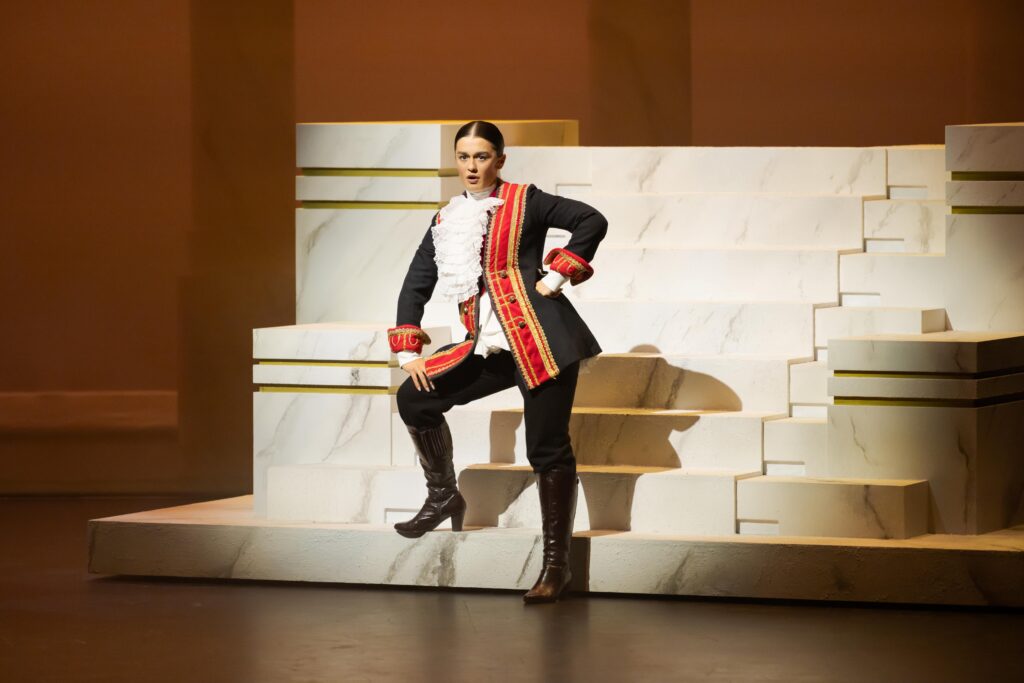
photo – Stephen A’Court

Wellington Opera presents:
Giuseppe VERDI – Un Ballo in Maschera  (libretto by Antonia Somma)

Jared Holt – Gustavo, King of Sweden
Julien Van Mellearts – Count René Anckarström (Renato), the King’s secretary
Madeleine Pierard – Amelia, the Count’s wife
Natasha Te Rupe Wilson – Oscar, the King’s page
Kristin Darragh – Ulrica Arfvidsson, a sorceress
Samuel McKeever – Count Ribbing, a conspirator
Morgan-Andrew King – Count Horn, a conspirator
Lila Crichton – Judge
Daniel O’Connor – Cristiano, a sailor
Chris Anderson – Amelia’s servant

Director – Jacqueline Coats
Set Design – Michael Zaragoza
Lighting Design – Rowan McShane
Costume Design – Lee Erihäpeti Williams

Conductor – Brian Castles-Onion
Wellington Opera Chorus (Director – Michael Vinten)
Orchestra Wellington

Opera House, Wellington
Friday, 8th August 2025

Wellington’s beautiful Opera House was the venue for the latest offering from the city’s eponymous opera company –  Verdi’s Un Ballo in Maschera, which opened on August 6th – I attended the second Opera House performance two evenings later, conscious that the production had had already garnered a good critical response.

Amongst the intriguing advance publicity for the work were references to the production’s use of classical archetypal elements presented in the ancient Greek myth of Artemis and Actaeon, the famous “hunter becomes the hunted” story. The opera’s Prelude accordingly depicts the drama’s monarch, King Gustavo of Sweden, with a pair of hunting dogs, cleverly mirroring this theme at the work’s end with a depiction of the King at a “masked ball” wearing a pair of stag’s antlers, thus symbolising the victim he was to become of a conspiracy amongst his courtiers.

The masks of course underpin another defining motif of the work, that of concealment, one emphasised in a programme note by the production’s director Jacqueline Coats, and given obvious emphasis in the opera’s final definitive ball scene, but also throughout the story in different ways.

Permeating the drama, of course, were the dominant themes of the King’s covert love for Amelia, the wife of his best friend Renato, in tandem with the conspirators’ plot to assassinate their monarch. And various intrigues enriched the action, such as Gustav’s and his courtiers disguising themselves for a visit a fortune-teller who had been threatened with banishment. This in turn led to a midnight tryst between Gustav and Amelia, and their affair’s eventual discovery by Renato, engendering the latter’s secret alignment with the conspirators to bring about Gustav’s end.

From the beginning the drama’s musical fabric was wrought of magic by Orchestra Wellington under conductor Brian Castles-Onion’s direction, the latter never missing a beat or a turn of phrase denoting an action or emotion by his players and singers. The chorus, representing both “allies” and “enemies” of the king, acquitted themselves sonorously as befitted their intentions, the result of Wellington Opera chorusmaster Michael Vinten’s always expert coaching  – Jared Holt’s King Gustav replied regally and graciously as the loved-cum-hated monarch, a foil for the initially more workmanlike tones of Julien Van Mellaerts’  Anckarstrom (Renato), the King’s secretary,  whose opening canzone “Alla vita che t’arride” was solicitious and dignified as suited the occasion.

Natasha Te Rupe Wilson (Oscar) – photo, Stephen A’Court
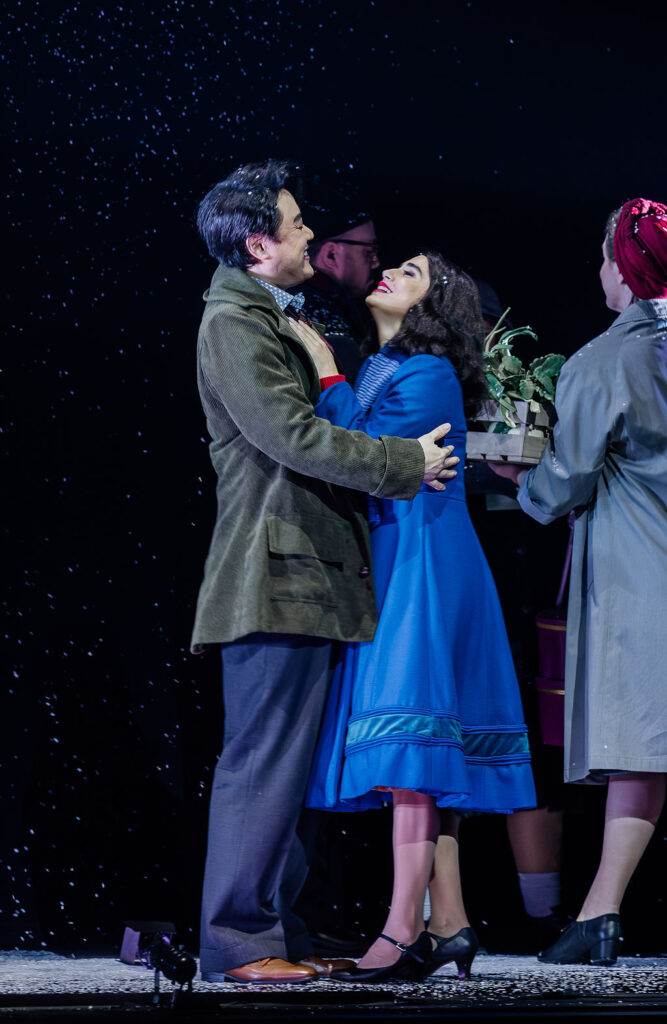
Some of the scene’s most consistently-engaging singing came with Natasha Te Rupe Wilson’s portrayal of Oscar, the King’s Page – the voice and theatrical deportment were a real delight in places such as her defence of the fortune-teller, Ulrica, in her ballataVolta la terrea fronte alle stelle”, rebuffing the condemnations delivered here somewhat jejunely by Lila Crichton’s Judge. In conclusion Jared Holt was able to generate plenty of devil-may-care energy in his “Ogni cura si doni al diletto”, inviting his courtiers to join him in donning a disguise and visiting the fortune-teller’s lair!

Scene Two, while vividly wrought by the orchestral introduction, seemed to visually fall short of Kirsten Darragh’s vivid descriptions in her “Re dell’abisso, affrettati!”. Nor did the chorus’s “O come tutto riluce di tetro”  reflect “how luridly everything glitters” –  here,  more ice-cold than lurid and infernal, as if this Ulrica was Erda out of Wagner’s “Ring” instead. As with the ensuing scene’s supposedly “campo abbominato”, I thought it all too brightly- and cooly-lit to reflect the “dark and infernal” aspect of the words, though the singers did their best. Ulrica’s palm-reading realisation that the man whose future she was predicting was REALLY doomed  was tellingly conveyed by Kirsten Darragh, especially the idea of the killer being his friend! Jared Holt did well with the rebuff of this in his “Ề scherzo od è follia”, his “laughing” tones adroitly conveying his public incredulity at the prophecy.

Madeleine Pierard’s Amelia rose above the discrepancies evident between the scenario of her gathering of the magic herb and her descriptions of it – her opening “Ecco l’oriddo campo ove s’accoppia al delitto la morte!” made me wonder whether the valiant scene-shifters had actually got the right “piece” out on the stage! – hardly suggestive of a place of execution such as a gallows, and with the scene itself surely needing to be darker to reflect Amelia’s terror and loathing (“m’empie di ricappriccio e de terrore!”). She and Jared Holt worked hard at their love-duet that followed without, I felt, recapturing the exhilarating charge of their “Tosca” the previous year here in Wellington, their kiss here far from any kind of “caution abandoned” quality suggested by their words.

By contrast, the arrival of, firstly, Renato to warn the King of danger, and then of the assassins themselves was superbly staged, the overt menace of the latters’ concerted torch-lit aspect making the mordant “comedy” of their discovery of Renato with his wife on a “nocturnal moonlight stroll” all the more delightful – their “laughter”, relished enormously by the audience well aware of the subject couple’s acute anguish, proved a highlight of the evening!

Madeleine Pierard (Amelia) – photo, Stephen A’Court
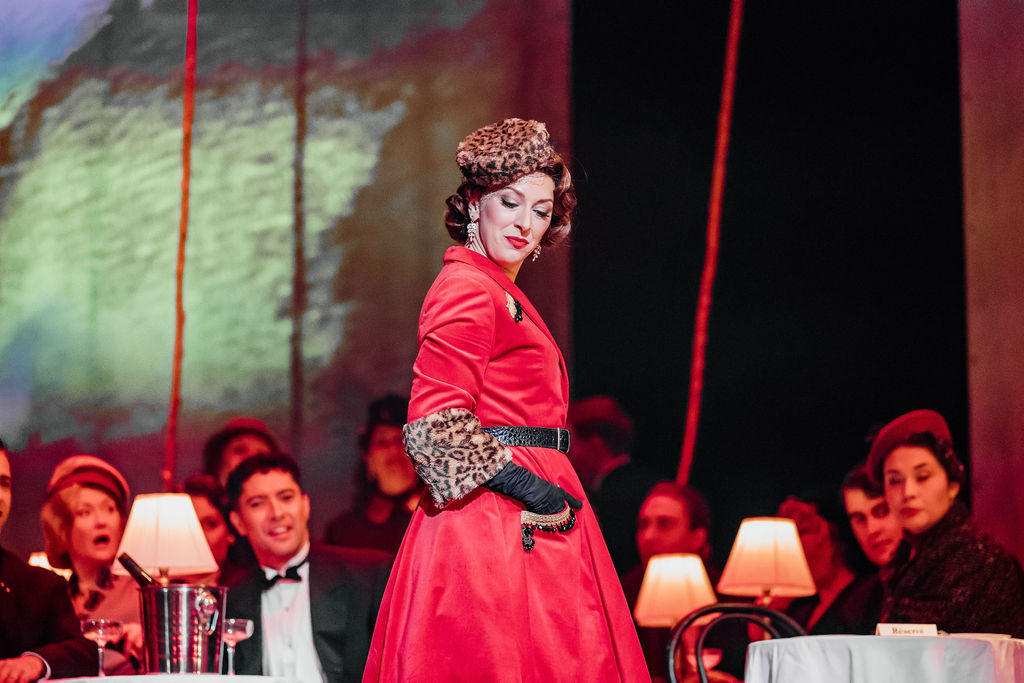
No less riveting was the subsequent exchange between vengeful husband and sorrowing wife, Madeleine Pierard’s “Morro, ma prima in grazia” as deeply-felt and moving as Julien Van Mellearts’s “Eri tu” was by turns impassionedly angry and deeply grief-stricken. And two more voices to impress in the following “plotting” scene were those of the conspirators, Samuel McKeever as Count Ribbing and Morgan-Andrew King as Count Horn – a resoundingly dark-toned duo!

Rivalling these two scenes in impact here was the splendid finale, launched by the brief appearance of the antler-clad King and the appearance of the masked revellers at the ball, the singing and choreography of the chorus again outstanding. Interactions between Oscar (another superb song-and-dance cameo from Natasha Te Rupe Wilson) and Renato over the mystery of the King’s identity further heightening the tensions created by the masked conspirators closing in on their prey with Renato in the van ready to strike, unaware that his victim had already proclaimed Amelia’s innocence by giving her the freedom she desired (touchingly expressed here, at the end, by Jared Holt’s mortally-wounded Gustav.)

No other art-form conveys so many different emotions in simultaneous ferment so exquisitely and heart-rendingly. Given some production aspects that didn’t resonate with me, I still found myself, along with the rest of this evening’s audience, warmly appreciating and acclaiming this “A  Masked Ball” as a feast of compelling theatrical action and music-making.

A double bill from Wellington Opera which pulled no punches – Dame Gillian Whitehead’s Mate Ururoa, with Ross Harris’s Notes From the Front

ROSS HARRIS – Notes from the Front (texts by Vincent O’Sullivan)
DAME GILLIAN WHITEHEAD – Mate Ururoa (libretto by the composer)

ROSS HARRIS  –  Song-cycle “Notes from the Front”
Richard Greager (tenor), Matthew Ross (violin), Emma Sayers (piano)

DAME GILLIAN WHITEHEAD – Chamber Opera “Mate Ururoa”
Cast: David Tahere (Captain Roger Dansey)
Brent Allcock (Commanding Officer)
Ariana Tikao (Whaea / Taonga Puoro)
Director: Sara Brodie
Theatrical Designers: Jacob Banks/Rebecca Bethan Jones
Conductor: Hamish McKeich
Stroma Contemporary Ensemble

The Hannah, Wellington

Friday, 11th July, 2025

Wellington Opera has surely brought off a kind of coup with these two works, Gillian Whitehead’s opera Mate Ururoa and Ross Harris’s song-cycle Notes from the Front being brought together for performance at a time when people everywhere on our planet surely have no greater, nor more urgent cause to question the rationalization, antecedents  and vindication of war.  Each of these stories draws from the same source, the conflict known as the First World War (1914-18), in which millions of people, mostly soldiers, but also civilians, perished, and which, ironically, drew in significant participation from the country geographically furthest from the actual conflict – Aotearoa, New Zealand.

Of these two works the earlier (2014) and first-performed was Ross Harris’s Notes from the Front  (the title in this context practically self-explanatory), with the text of the seven songs drawing from the letters “home” of Dunedin-born Alexander Aitken, who enlisted with the Otago Infantry as part of the New Zealand Expeditionary Force. The letters were written in places where he served in action, from Gallipoli to the Somme, at which latter place he was wounded. Aitken was particularly remembered for smuggling a violin into his “kit” to take with him and play on occasions in between the sequences of  “action” (the instrument miraculously survived all of this and was brought home, to be later donated to the Otago Boys School, where it is currently on display).

Though not all verbatim quotes from Aitken’s letters, poet Vincent O’Sullivan based the songs’ texts on the latter, summarising the soldier’s traumatic (and in places even surreal) experiences while on active service, and poignantly rounding the sequence through a declaration to Winifred, his future wife, whom he had met when a student, and with whom he subsequently emigrated to Scotland, taking up a mathematics professorship at Edinburgh University.

Aitken’s feelings regarding the war and its effects upon humanity in general were here laid bare in the first, and in places hallucinatory song  Visions, much later, which delineate the psychological traumas that haunted him throughout his life – “nightmare seizes me – the veiled figures…….I count on nothing more….”  – words hauntingly voiced by tenor Richard Greager, and underpinned by pianist Emma Sayers’ beautifully-focused touch, along with violinist Matthew Ross’s wraith-like postscript. The second song The Notes depicts Aitken hauntingly playing his violin in situ, “between concussions”, the latter suggested by short, sharp piano irruptions – along with bemused “that’s his violin” comments from his listeners.

Bitter irony and  savage underlinings characterise the third song’s outbursts, the piano subdued, its notes almost cowering, as the singer describes the hell of the trenches, a nightmare like nothing described in official dispatches – “it’s the blood – and the guts – and the stink of the flies!….that’s how you tell we’re Anzacs!…….” – Richard Greager grips our sensibilities as he describes people he knew from home – “Harry..…the bloke from Tuatapere……the sun turns black!….” as these people’s lives are destroyed, and the bitterness reaches its peak at the words  “…..it’s a change from Gallipoli, soldier, when you reach the Somme….”

The violin begins the elegiac fourth song On a Different Note as if playing “Deutschland Uber Alles”, accompanied by a deep piano rumbling which then breaks off – the notes the violinist plays reminds the singer of Haydn’s tune, heard at another Christmas from a German’s violin –“….a single line, defying war…..”  expressed in deep-throated tragedy. The next song Pretty Much Verbatim is the blackest irony possible, as the singer and piano characterise a fellow-soldier “Clark of Dunedin” with a description of how this friend sacrificed himself against a live grenade, holding it hidden from his mates –  “…….it is pride enough to tell I was there…..what I breathe is his….”.  Though more rhapsodic, the sixth song  Close as this is just as unsparing, describing the soldier’s imagined reunitement with a friend killed on the battlefield, but alive, back in Otago – “on the peninsular……we met where one of us had no shadow, one of us living, one of us dead….close as this……”

The last piece, Song for Winifred is a tribute to Aitken’s wife and an impassioned hope for a return to a normal life together – begun by the violin and joined by the piano, the singer passionately declaims “….Love, love in any weather….in the summer grass – and God! – the seasons pass……”  – beautiful and intensely moving. The work’s but one all-too-eloquent example from Ross Harris’s and Vincent O’Sullivan’s group of resounding collaborations regarding the subject of war’s inhumane ambition and senseless carnage.

Besides its own intrinsic qualities the Harris work made the perfect introduction to Gillian Whitehead’s Opera Mate Ururoa (a title translated as “fight bravely” or “fight to the death”, and taken from a Maori  whakatauki, or proverb “Kaua e mate wheke, mate ururoa” (Don’t die like the octopus  (that gives up easily), die like the shark (that keeps on fighting)). Whitehead undertook to write the work at the behest of David Tahere, a US-based Maori baritone whose whanau, he discovered, had close historical connections with that of Roger Te Kepa Dansey, the central character of the opera who enlisted as a member of the “Native Contingent” formed here when Britain declared war on Germany in 1914.

Dansey’s wartime story tells of the humiliation of both the Maori and Nepalese Gurkha soldiers being regarded as “second class” by the British hierarchy, and relegated to performing menial jobs like digging trenches – only when the casualty lists at places like Gallipoli deemed it necessary were Maori and Gurkhas allowed to fight. Promoted to the rank of captain, Dansey then fell foul of his commanding officers by refusing to follow orders which would result in his men facing certain and pointless death, resulting in his disgrace through accusations of cowardice and desertion, in the wake of his famous assertion regarding fighting a “white man’s war” where soldiers were “sent into” battle rather than “the Maori way” of men led by their chiefs from the front.

Thanks to the efforts of influential Maori politicians of the time Dansey’s true qualities of leadership were recognised and he was reinstated. After returning to the frontline in France at the Somme, he was gassed and had to be sent to England to recover – he remained in Europe for the next nine years, working on rehabilitation schemes in Belgium before returning to New Zealand in 1927 and settling in Rotorua, where he died in 1938 of complications resulting from his war injuries.

Whitehead wrote her own libretto for this work, intending at first for it to be a “working draft”, but deciding as she developed the piece further to retain it as a strong “from scratch”  initiative, one  creating its own on-going tradition. She was assisted throughout by David Tahere’s knowledge through his connections with Dansey’s surviving whanau, and by director Sara Brodie’s enthusiasm. respect and feeling for the project However, preparations for the first performance of Mate Ururoa at Carnegie Hall, New York, in November 2021 were unexpectedly thwarted by the Covid epidemic, so the “premiere” had to be rescheduled, not inappropriately, to its Southern Hemisphere origins.

Interviewed a couple of days before the premiere, the triumvirate of composer, director and lead singer delineated aspects of their respective journeys towards the oncoming performance.  Whitehead, with several music-theatre pieces of different kinds under her belt, was calmly philosophical regarding outcomes, emphasising the phenomenon of a work existing only in the moment of performance, and expressing quiet confidence in the extent to which her colleagues would help successfully realise these outcomes. For Brodie there was “a humbling satisfaction” at what she felt privileged to be part of (she and Whitehead had previously worked together on a 2016 music-theatre piece of the latter’s, Iris Dreaming).  Tahere characterised the opera as resembling something presented in a kind of “dream state”, with many “fragments” of the protagonist’s experience brought into play in vastly differing situations involving diametrically-opposed cultures, drawing attention to the composer’s representation of these differences, with the used of both conventional instruments (and taonga puoro (Maori instruments), straightaway giving an extra dimensional feel to these different worlds.

As with the earlier Ross Harris song-cycle, the presentation of the opera generated its own singular ambience of almost claustrophobic intensity in its depiction of a single individual pitting himself against almost insuperable odds with courage and resolve……my notes are as follows: Upon entering this wonderfully indeterminate but pliable performance space finely modulated by designer Rebecca Bethan Jones, and ambiently lit by Jacob Banks, David Tahere’s presence as Captain Roger Dansey flows into its world like a beam of light awakened by the taonga puoro “call” from one of the bird-song-like indigenous instruments played by Ariana Tikao, the singer’s words making reference to his birthplace, near Ohinemutu, in Rotorua – “Here the steam rises – my home, my resting place”…. and at once we realise that here is a man looking back over his life, the first reminiscence being his confrontation with Brent Allcock’s stiff upper-lipped Commanding Officer accusing Dancey of defying orders at Gallipoli in order to save the lives of his men. Conductor Hamish McKeich keeps his Stroma Ensemble forces on the boil throughout, their frequent interjections representing both the establishment and the individual, tracking the exchanges between both personalities and the interaction of modern instruments and taonga puoro to underline the conflict between not only Pakeha and Maori but officers and enlisted men.

The mention of a “white man’s war” and Maori’s progress from being an “enemy” of the British to an “ally” brings great declamatory tones from Tahere, and a distinctive “conch shell-like” call from Ariana Tikao’s taonga puoro instrument accompanied by the cracking together of percussive stones. As Dansey recounts his people’s history of interaction with the British, McKeich and his players elaborate with music that fuses sounds of warfare with ceremonial regimental-like calls – and the singer intones the opera’s theme ”Kaua e mate wheke, mate ururoa!”  (Die not like an octopus, but like a hammerhead shark!) before breaking into the famous haka, followed by a lament, in Maori “Let me weep for my dead! – they are not like the cabbage tree that springs up again!” (according to witnesses the haka by the soldiers apparently took place on the beaches at Gallipoli….).

Seemingly unimpressed, the British Officer again appears demanding an explanation for Dansey’s disobedience, to which, to the accompaniment of the taonga puoro  Dansey refutes the charge and sings about the chiefs in Maoridom “leading their warriors into battle” – unlike in the “white man’s war” where soldiers alone are sent to slaughter! His explanation is ignored, and he is dismissed and sent back to New Zealand – sostenuto wind tones then are sounded to haunt the words  “I saved many lives”, to a ferment of instrumental affirmation!

From here the music and the scenario becomes almost transcendent, with Tahere recounting his subsequent reinstatement due to intervention by influential Maori politicians of the time, his return to Europe and his experiences in the trenches at the Somme, where he is gassed and has to be relocated to England to recover – we witness his delirium (a bull-roarer sounding what seemed like a heartbeat as he struggles to rid himself of the poison in his system) – the players blow soundlessly through their instruments to further depict the desolation – and he imagines being comforted by his mother (who is sung by Ariana Tikao), her words foretelling his recovery and his work in post war Belgium, helping people recover their lives.

The Soldier sings a duet with his mother – these exchanges have a “time standing still” feeling, as we sense when she sings to him he has since returned to his present back in New Zealand and is near death. “You will stay here beside the rippling waters of Lake Rotorua – Kua wheturangatia” – words which means “Return to the celestial realm of your ancestors”…… –  What gave this particular performance a unique turn at this point was the voice of an audience member suddenly replying with a poropororoaki (a farewell to the dead) to the singer playing Dansey and then the rest of the assembled whanau of the story’s dying man standing and singing  “Aue Ihu tirohia”, the official hymn of the 28th Maori Battalion….. and so we sing the displayed words with them…

The lights eventually do come up and we applaud, most vociferously when Gillian Whitehead comes to the stage to acknowledge our tribute – a redolently memorable glimpse into aspects of our nation’s past that continue to give crucial relevance to our somewhat tumultuous present!


Atmospheric production, ingratiating voices, gentle updating – NZ Opera’s “La Boheme” in Wellington

Elena Perroni as Mimi and Ji-Min  Park as Rodolfo
Photographer; Andi Crown

Giacomo PUCCINI – La Boheme (Opera in Four Acts)
Libretto by Luigi Ilica and Giuseppe Giacosa

Cast:  Ji-Min Park (Rodolfo)
Elena Perroni (Mimi)
Samuel Dundas (Marcello)
Emma Pearson (Musetta)
Benson Wilson (Schaunard)
Hadleigh Adams (Colline)
Robert Tucker (Benoit/Alcindoro)
Chris McRae (Parpignol)
Joseph Haddow (Sergeant)

The Freemasons Foundation NZ Opera Chorus
Te Whanganui-a-Tara Children’s Voices
Chorus Director: Michael Vinten
Orchestra Wellington
Conductor: Dionysis Grammenos

Director: Bruno Ravella
Set Designer: Tiziano Santi
Costume Designer: Gabrielle Dalton
Lighting Designer Paul Jackson

St.James Theatre, Wellington

Wednesday, June 18th, 2025

I was interested to read in the splendid programme provided by New Zealand Opera for this production of “La Boheme” the director’s notes, headed by a paragraph in which appeared the statement containing the words “making La Boheme anew”. Having been by turns intrigued, delighted and dispirited over my years of going to opera by different directorial decision-making regarding production outcomes, I wondered to what extent the director here, Bruno Ravella, was planning to “refresh” the work’s familiar scenarios, characterisations and outcomes to a point where “La Boheme” might no longer be recognisable as such!  I needn’t have worried, as it turned out – though the setting here was designed to reflect an immediately post-World War Two ambience, the story remained in Paris, and the opera’s essential theme – the fragility of youthful relationships – emerged via the cast’s interactions with their director as whole-heartedly and with as much sweetness, volatility and vulnerability as it ever has.

Act One opened depicting the garret in which four young artists lived, the set conveying as much bohemian ambience as one would expect, its dimensions framed by huge canvasses and an enormous skylight – I did think some of the furniture set back too far (the  stove, for example) on a voluminous stage, distancing us at first from the various characters as they made their gradual appearances and revealed their personalities. Ji-Min Park’s Rodolfo and Samuel Dundas’s Marcello made an engaging pair, playing off one another throughout interactions such as their burning of the “drama” in the stove, all the while their vocal tones “colouring in” for us their sympathies and differences. They were ably complemented by Hadleigh Adams’ Colline and Benson Wilson’s Schaunard, and with each of the four voices benefitting from movement towards the front-of-stage,  particularly with the “landlord-asks-for-rent” episode, and a hilariously pathetic characterisation of the unfortunate Benoit, here, by Robert Tucker. Though Wilson’s Schaunard and Adams’ Colline didn’t project the full amplitudes of their fellow Bohemians, their ensemble during the landlord’s gulling and eventual ejection by the resourceful tenants had all the energy and humour required.

The entrance of Mimi (Elena Perroni) completely altered the ambient trajectories of the story – which took place after the Bohemians apart from Rodolfo had gone out to celebrate Christmas Eve with the ill-gotten gains of the rent money, while Rodolfo, with an article to finish for his newspaper, had stayed behind. A knock at the door, and a neighbour, a beautiful, pale-faced young girl dressed in blue appeared, asking Rodolfo for a light for her candle. Perroni’s voice was at first tremulous and faint, but upon finding she had somehow dropped her key and anxiously coming forwards, the tones suddenly blossomed and filled the spaces, as it did gloriously in her aria “Mi Chiamano Mimi” (though appreciative applause greeted Park’s earlier “Che gelida manina” the offstage banter of the Bohemians with their ”hurry up” calls broke into the spell created by Perroni’s equally ardent efforts and gave the audience no time to respond!). But an atmospheric touch was the appearance of the snowflakes descending from the dark all around the departing lovers at the act’s end.

The Momus’s Café scene opened with its traditionally swinging gusto, the crowd-choruses placed well forward and voices projecting strongly, though seemingly light on numbers,  This was in part made up for by designer Gabrielle Dalton’s eye for “period” among the crowd’s general dress-code, from which Chris MacRae’s Parpignol and his followers, the children, were differentiated with “threads and patches” – the truly amazing voices and characterisations of the Wellington Children’s Chorus members delighted with their energies and vocal clarities! Amid the merriment Marcello’s quick anger at the sound of his ex-girlfriend Musetta’s voice was tellingly conveyed, even if I didn’t think the surtitles needed to be vulgarised as much as they were in places by way of indelicate comments regarding Musetta’s moral character – this was supposedly 1947 and not 1974!

Emma Pearson as Musetta
Photographer: Andi Crown

I thought Park’s and Dundas’s voices came increasingly into focus here, Park’s tenor gradually clearing its slightly splintered first-act tones, and ringing out more truly to my ears, as did Dundas’s Marcello similarly gain in authority in response to his flighty sweetheart Musetta’s appearance. Emma Pearson’s Musetta was a show-stealer, ably reinforced by her manner, her eye-catching crimsonly-drenched costume and the pathetically-wrought attentions of her “sugar daddy” Alcindoro (Robert Tucker again, after a quick change from the hapless landlord’s attire!). From the moment of her entrance onwards, it was her “scene”, her voice by turns playfully “kittenish” and redolent with longing. Her deportment on the lowered swing became the centre of everyone’s attention, as were her antics with the shoe to break her former lover Marcello’s resistance, and win back his affections. And with an almost Mahlerian touch – the arrival of a military band on stage, playing with superb swagger and ceremony – the act marched to its picturesque end!

The most intense of the Opera’s four acts is the third, set in the dead of winter, in bleak surroundings and with a mere handful of participants, underlining the desolation of the scene and its bitter-sweet human tragedy. Cameo appearances by a guard-soldier checking people’s papers reinforced the sense of winter’s oppression, as the opera’s four principal characters met variously, conveyed their purpose and then withdrew to “winter out” the cold. Marcello and Musetta spent the time quarrelling, as Mimi and Rodolfo heartbreakingly decided they could no longer live together and would go their different ways, but not until spring’s arrival. We relished every moment of Musetta’s flirtatious behaviour and Marcello’s jealousy, while feeling both Rodolfo’s and Mimi’s initial despair at the latter’s failing health and eventual acceptance of their destinies, a scenario of contrasts beautifully judged by the composer and characterised here most ambiently by the singers and players. In particular, Ji-Min Park’s Rodolfo and Elena Perroni’s Mimi together gave us phrases and tones in places such as “Vuoi che aspettiam, la primavera ancor?” (Shall we wait until spring comes again). that in the opera’s time-honoured ways touched our hearts.

The finale returned us to Act One’s bohemian garrett, with what seemed almost like déjà vu – Rodolfo and Marcello both at work, but thinking and singing about their respective loves in absentia. A “here before” feeling was heightened when the other two Bohemians arrived, again provoking horseplay and high spirits, until Musetta’s sudden arrival with an obviously ailing Mimi put everybody into  earnest, if quietly-despairing emergency mode, leaving Rodolfo and Mimi alone together reminiscing about their past life and voicing dreams of possible continuance. The friends returned with touching accoutrements, including a muff for Mimi’s hands – but all too late! Without the music the scenario would have seemed unbearably contrived and sentimental, but Puccini’s music worked its usual magic and brought the usual oceanic breakers of emotion to the moment of the hapless heroine’s passing and the resulting consternation of those all around her.

Over three of the four acts I couldn’t fault the settings and their ambiences – a tribute to the visionary deportments of structure and detail on the part of designer Tiziano Santi, and in close conjunction with the lighting skills of Paul Jackson.  Act Two started and finished resplendently, though I missed the sheer unbuttoned festivity remembered from other production’s crowds in the opening coming-and-going scenes – and towards the end the bastions of Café Momus for me didn’t quite lift from the ground with the impact of Musetta’s Waltz song’s climax as I’ve previously experienced; still, those superb young chorus voices and the military band provided enough complementary swagger to give the scene its own distinction. I came away from the production, however, with the sounds of those voices of the opera’s four principals in Act Three stuck in my memory, superbly conjured up by conductor Dionysis Grammenos and his Wellington Orchestra players, everything passionately emoting through the contrasting bleakness – the music forging with the city’s wintry desolation an unforgettably poignant partnership.


Dazzlehands – a book that dances – from RNZ Ballet


    Dazzlehands                                                                                                                                                                                 
    Royal New Zealand Ballet
    St.James Theatre, Wellington
                                                                                                                                                                                                                                                                                                                  Photo credits: Stephen A’Court

It’s school holidays, so take the book Dazzlehands by local children’s writer Sacha Cotter and illustrator Josh Morgan then adapt it for performance. The protagonist is a dancing pig, so you’re halfway there already.

Choreography by RNZB company dancer, Joshua Guillemot-Rodgerson,is cheeky and his use of repeated action motifs cleverly echoes the rhythms in the text. The sassy dancers at RNZB step up to develop the characters in the farmyard and they relish the chance to play the silly card. Most of the animals conform to expectations, but Pig is the exception.

The work is set to music by local composer William Philipson, with narration stitched in. Costumes designed by Victoria Gridley are up and over the top. Fill the theatre with little ones and their older significant  others, and you can’t really go wrong.

In saying that it’s worth acknowledging how much work goes into theadaptation of any work from one genre to another, then co-ordinating all the elements of such a project in a way that still honours the original. Just because the book is for children doesn’t mean it’s childish work. The theatre can work for all ages but you have to know how to play that.

There are sold out seasons of Dazzlehands in various venues, with a te reo narration, a deaf-signed and relaxed performances included. Huia are the country’s leading publishers of bi-lingual books for children, and both editions of this work, in English, Dazzlehands and in te reo, Ringakõrero — are on sale in the foyer.

The story and moral of Dazzlehands allows a non-conformist character to play it his way. The farmer wants Pig to behave normally, like all the other animals do — Sheep goes Baa-aa, Cow goes Moo-oo, Hen goes Cluck and Flamingo makes a remarkable sound (a surprise to meet a flamingo on a farm anyway but why not?) The lady farmer grows increasingly frustrated when Pig keeps producing glitzy gloves and turning to disco dancing instead of obliging with an “Oink” as requested.

We’re reminded of the free-thinking family’s mantra – “Sit down wheneveryone else is standing up, stand up when everyone else is sitting down”.

Anthropomorphism is the spine of so many animal tales for children of all ages, from Aesop’s Fables, Three Little Pigs, Wind in the Willows, Beatrix Potter, Alison Uttley … not to mention the crazy romp of Norwegian rock group Ylvis in What Does the Fox Say? and the closer-to-home works by Margaret Mahy (The Lion in the Meadow would be a bobby-dazzler of a ballet), and Paul Jenden who choreographed Lynley Dodd’s Hairy Maclary tribe. It’s just two more bookshelves away to George Orwell’s Animal Farm and the metaphors at work when those farm animals unite to fight off oppression and find freedom. (Note itspublication date 1945).

All the Dazzlehands animals come to want a bit of the glitz so they learn the jazzy dancing — but Pig doesn’t really want to be like anyone else, so as they come across to follow his lead, Pig scores the last line in the play, just one word, and you don’t need me to tell you what that word is. Cotter and Morgan have produced a number of children’s book titles with Huia, including the award-winning The Bomb (that’s the swimming pool variety). It’s worth a few moments to listen to the online version of that being read and accompanied by Claire Cowan’s luminous composition for members of the New Zealand Symphony Orchestra.

There’s also a fabulous lineage of children’s story ballets within the history of RNZB’s own repertoire, all of them worth re-visiting at some stage. Russell Kerr’s productions of Carnival of the Animals, Peter and the Wolf, Alice in Wonderland and his fabulous Peter Pan are all classics. But then who could forget works Kerr made from tales by New Zealand’s stellar children’s book illustrator, Gavin Bishop. Te Maia and the Sea Devil called for a wonderful underwater setting — but at the top table is the legendary Terrible Tom which thrilled so many audiences of children who lifted the roof with delight.

I recently watched a video of this winner from 1980s, with music by Philip Norman, and was thrilled to see my memory had not exaggerated the genius of Russell Kerr, choreographer. Usually it’s a book that then becomes a ballet, but in this instance it would be a ballet that became a book. Now wouldn’t that be fun?