
Gioachino ROSSINI – Le Comte Ory
Original libretto by Eugenè Scribe and Charles-Gaspard Delestre-Poirson, freely adapted for NZ Opera by Simon Phillips
NZ Opera June 2024, St.James Theatre, Wellington
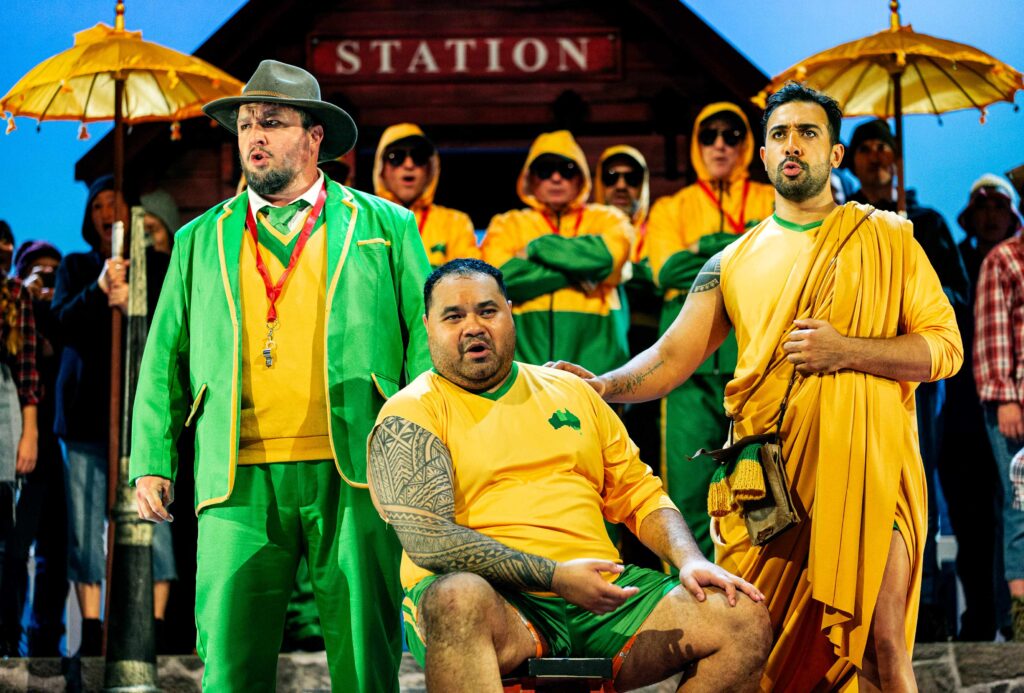 Act One: Wade Kernot (Coach), Manase Latu (Count Ory), Moses MacKay (Raimbaud), NZ Opera Chorus – photo credit: Lewis Ferris
Cast: Manase Latu (Count Ory), Emma Pearson (Countess Adele), Hanna Hipp (Isolier), Moses Mackay (Raimbaud), Wade Kernot (Tutor/Coach), Andrea Creighton (Ragonde), Tayla Alexander (Alice)
New Zealand Opera Chorus Wellington /Te Whanganui-a-Tara
Orchestra Wellington (Concertmaster: Amalia Hall)
Brad Cohen (conductor)
Simon Phillips (director)
Tracy Grant Lord (set and costume designer)
Matthew Marshall (lighting designer)
Luka Venter (assistant conductor)
Matthew Kereama (assistant director)
St. James’ Theatre, Wellington
Thursday 13th June, 2024
New Zealand Opera continues its progressive “new look” agenda for 2024 under its new General Director Brad Cohen with a rarity for local audiences, Gioachino Rossini’s penultimate opera, Le Comte Ory. Regarded by many as the composer’s comic masterpiece, the opera has a story whose exploration of sexual deception, disguise and manipulation not only adroitly ticks all the boxes of its own time and place, but responds remarkably well to a near-complete reworking in its relocation to Aotearoa New Zealand, with all of the associated updates necessary for the change of scenario amusingly (and in places disconcertingly) kicking in with a vengeance!
It took a while to win me over to director Simon Phillips’ in places radical reworking of the libretto’s English translation (a French speaker would have been totally nonplussed attempting to marry a good deal of the words enunciated by the singers with the surtitle texts!), but I eventually “gave in” to the idea – I think the moment of my actual capitulation was when the story’s young and inveterately libidinous “Count Ory”, posing as a spiritual guru at a wellness retreat for women, was spectacularly unmasked as his true lecherous self at the end of Act One by the appearance of his own rugby coach, plus team-mates, hot on his AWOL trail and intent upon returning him to “the fold”. This near-apocalyptic moment all but transfixed our sensibilities when the singers’ exclamation “Ciel!” (Heavens!) appeared on the surtitle screen as “What the f….?” All reservations from that point onwards were made null and void by the sheer crypto-current impact of the subsequent revampings! My misgivings, despite themselves, knew no more that evening!
I’m still tickled by the thought of the transcription of the words “du sang du Sarracin” (the blood of the Saracens) as “Springboks’ blood” in the husbands’ homeward message of triumph on the contemporary field of battle to their wives! In Act Two the updated amendments came thick and fast, most of them funky and to the point, even though some didn’t seem worth the effort (one of them to do with “an over-forward forward” and another making reference to a “coccyx”) – and Ory’s slip of the tongue when first calling his sisterhood “the squad” didn’t work as well as the original’s faux pas “ce sont eux…..er, ce sont ells!”. A by-product of the surtitle rewritings was that I felt they became a kind of “reality TV” in themselves in places, frequently taking our attention away from what the singers were actually doing with the words on the stage. Most of what Phillips came up with I enjoyed, but, as I’ve said, it was for me laid on a tad too thickly at times.
The rest of the updated on-stage detailings hardly missed a trick, with many a delightful and amusing touch – the birdsong right at the start, the “Hi-de-hi!” welcoming entourage at the station, complete with a truly wonderful steam-train entrance, and the preponderance of cell-phones among the “guests” invited to the “Chateau Whareora”. Word has spread regarding the presence of the “guru” thanks to the efforts of his right-hand man, Raimbaud, who prepares for Ory’s entrance with a red carpet and coloured flags, and various “gifts” donated by people who have heard of the hermit’s “healing powers” and helpful advice. We meet Ragonde who’s the PA for the Countess, and worried about both her mistress’s melancholic state and her own husband’s continued absence, then afterwards Isolier, young, feminine and sporty, who’s Ory’s personal physio, but in love with the Countess, and Tutor, the rugby team coach who’s looking for Ory, having heard about the “guru” and having his suspicions as to where “Horny McOry” is. Another red carpet entry, complete with photo-popping paparazzi, brings us the extremely chic Chateau-owner, Countess Adele, to the joy of the love-sick Isolier – but just as the goatish guru-in-residence thinks he has Adele at his fingertips and outmanoeuvred his rival, the Coach suddenly reappears and denounces Ory by revealing his true identity (see above!)….
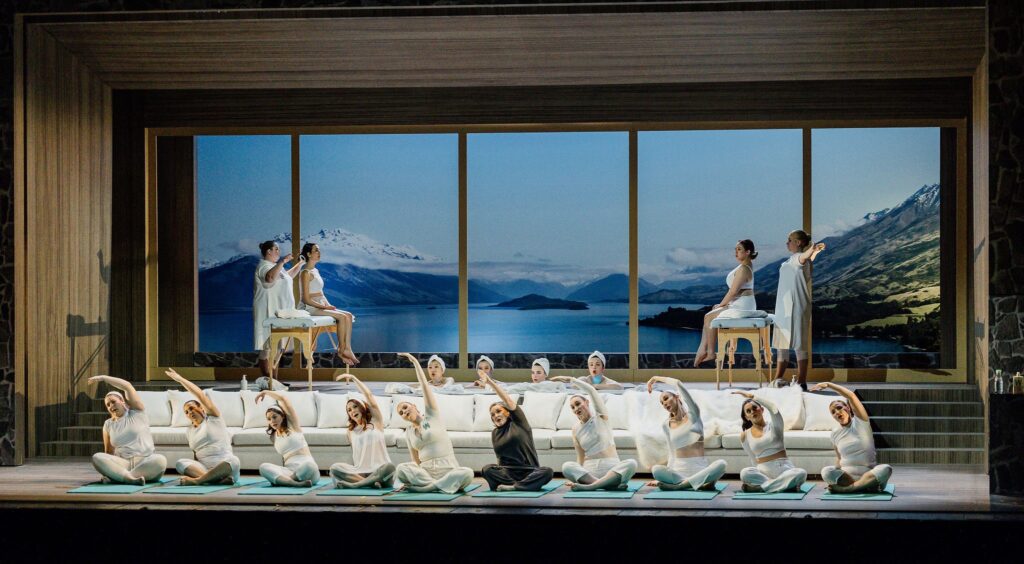 Le Comte Ory – Act Two (beginning) – NZ Opera Chorus, with Emma Pearson (Countess Adele), Tayla Alexander (Alice) and Andrea Creighton (Ragonde)
The Second Act features Ory’s follow-up plan to gain access to the Countess, disguising himself and his teammates as women members of a local religious sect being pursued by the same Ory and his men. The so-called pilgrims are let into the lodge when a fierce storm breaks – wonderful sound and lighting effects – and the women/men are given shelter by the Countess and her women. Left to themselves the imposters show their true colours with a round of drinking songs (did Berlioz take a leaf out of Rossini’s book here for his roistering Auerbach’s Cellar Scene in “La Damnation de Faust”?) as all make merry while anticipating further sport afterwards (“There’s nosh as well as potential nookie”) but they retire at last. When Isolier arrives with news of the womens’ husbands’ unexpectedly early return, she warns the Countess that in fact the pilgrims they are housing are Ory and his men in disguise! This is resolved by a delicious trio where the principal randy intruder is tricked into bed with the two women and then tied up, having to admit defeat and leave, taking his “entourage” with him as (thanks to adroit changes behind the scenes) none other than the All Blacks (in traditional uniform to boot!) arrive home to their wives, as champions – and all is well.
Whatever one’s opinion of the antipodean reworkings of the original scenario of the opera, one couldn’t help but admire the zest, energy, enthusiasm and the palpable enjoyment that emanated from the St James’ stage this evening – everybody I spoke with afterwards had that sense of experiencing something of what Simon Phillips called the vibrancy and amusement of human behaviour’s foibles in what they’d seen and heard in this modern realisation of the opera. And as Phillips also put it, even if such treatment was not to some people’s taste they would still have revelled in what he called the “sheer virtuosity of this dazzlingly talented cast” in bringing the performance to life.
One couldn’t help but reflect on how the transformation of the original opera’s time-and-place scenario resonated in the present, however unexpectedly and incidentally – simply the Countess Adele’s idea at the beginning of the Act Two to provide shelter for whom she considered at first to be homeless people, and then more seriously refugees fleeing from oppression straightaway reflected contemporary situations of which we’ve been all too regularly made aware. And the libretto’s crudely reworked translations brought into focus a long-held feminist viewpoint that opera seems to regularly institutionalise the undoing of women as victims of male brutality; and that the “calling out” of certain attitudes and behaviours as exhibited by Count Ory for what they represent in a larger picture is in fact long overdue. The recent “me too” movement has also reflected a change in the balance of power regarding interaction between the sexes that these candid commentaries from both sides resoundingly echo.
In whatever sense, each cast member brought a distinctive quality of whole-heartedness to his or her role – as Count Ory, Manase Latu seemed to fill out every cubic measure of his character with roguish intention of a concupiscently self-serving kind, almost Falstaffian in his buffoonish scheming and ultimate humiliation – his voice impressively negotiated the numerous stratospheric notes in a way that readily conveyed his character’s overweening confidence. Equally compelling was Emma Pearson’s enticing portrayal of the Countess Adele, by turns confidently imperious and vulnerably girlish, and with a vocal armoury that seemed in charge of every emotion – an enthralling performance.
Ory’s partner-in-crime, Raimbaud, was sung by the mellifluous-voiced Moses Mackay, the first solo voice we heard in the opera, summoning the people who had gathered to attend to his master, his tones ringing and clear, his presence persuasive and credible. And in Act Two his retelling to the disguised “pilgrims” of his liquor-collecting adventure became a tour de force when echoed by the chorus’s enthusiastic interjections. Another voice we heard early on was that of Andrea Creighton’s with her steady, whole-hearted and ever-solicitous assumption of Ragonde, the Countess’s PR agent and confidante, one whose husband was among those absent on the “field of battle”, and, along with the other women, intrigued by the presence of the “holy man”.
I enjoyed Hanna Hipp’s whole-hearted Isolier, completely at ease with her character’s delightfully equivocal function in the story’s re-working of the “trouser-role” practice common in opera, here as a same-sex would-be lover of the Countess. As in last year’s “Cosi fan tutte” I found her singing and absorption of her character totally compelling, with her devotion to the Countess touching and resonant throughout. She also effectively established her connection as team masseur with Wade Kernot’s authoritative Coach, with whom she arrived at the resort, in search of the missing Ory, Wade Kernot then riveting us with his imposingly-voiced “tale of travail” regarding his troublesome protégé!
Rossini always writes engagingly and excitingly for his choruses in opera and “Le Comte Ory is no exception – particularly in the Second Act there’s fun and games aplenty, which the “Wellington Chapter” of the New Zealand Opera Chorus took to like the proverbial ducks to water. In terms both of singing and stage deportment, the singers achieved marvels of evocation, delighting us with their antics in all manifestations. Of course it was Michael Vinten in Wellington doing the honours as Chorus Director in his accustomedly splendid manner.
All of this, of course, was conceived, planned and executed with aplomb by director Simon Phillips, set and costume designer Tracy Grant Lord and lighting designer Matthew Marshall, whose efforts couldn’t have helped but been admired in regard to their (at times) breathtaking daring but still ultimately well-grounded sense of what was possible to make work on a stage in Aotearoa New Zealand. As Oscar Wilde once put it, the important thing is “being talked about” – and this is what’s been here achieved.
As befits somebody who’s actually made a recording as a conductor of this very work (Naxos 8.660207-08 – https://www.naxos.com/CatalogueDetail/?id=8.660207-08), conductor Brad Cohen (who also happens to be the current General Director of NZ Opera) seemed to bring to the performance all the musical and theatrical qualities needed to put across the zany escapades of the work with burning conviction. Perhaps the charm of a previous generation of Rossini conductors I’ve encountered on recordings (Vittorio Gui, Tulio Serafin, Carlo Maria Giulini) has been of late overshadowed by a more up-to-date snappiness of manner and generally higher-octane virtuosity among today’s maestri and their musicians. That old-world charm is something I occasionally find myself again yearning for – but there was no doubting the brilliance of both individual and corporate skills from Cohen and Orchestra Wellington in the pit of the St.James Theatre on this particular night, garnering a well-earned tumult of applause and appreciative shouts at the work’s conclusion from an obviously well-satisfied audience.
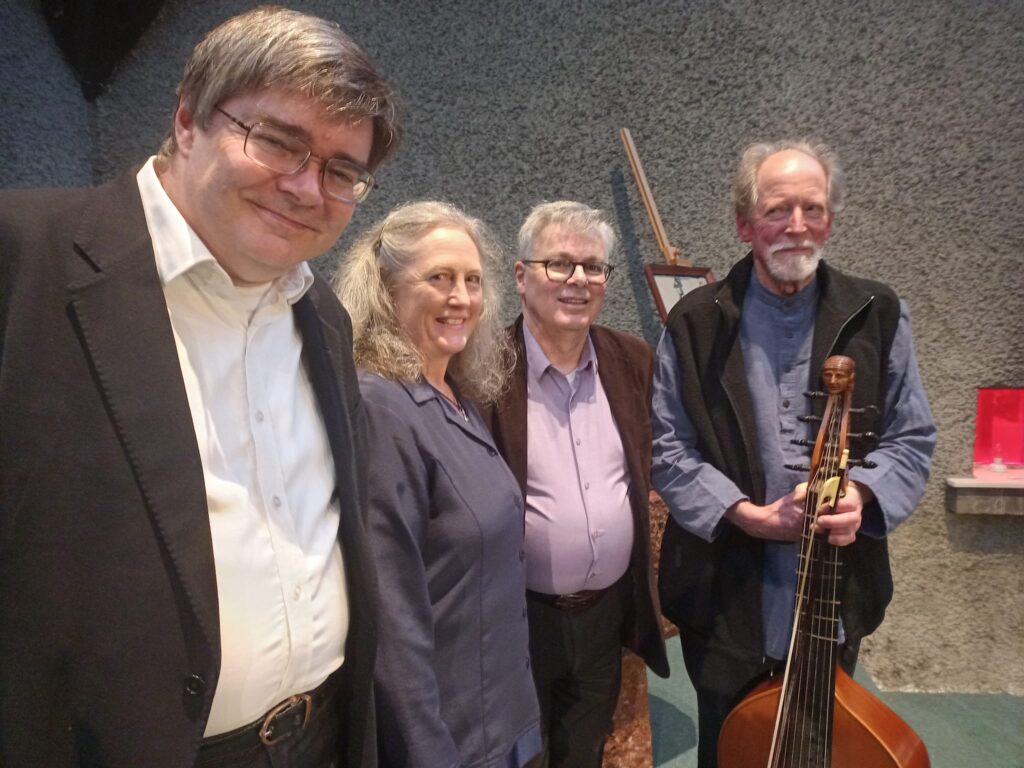 David Morriss (bass), Pepe Becker (director, soprano), Douglas Mews (keyboards), Robert Oliver (bass viol)
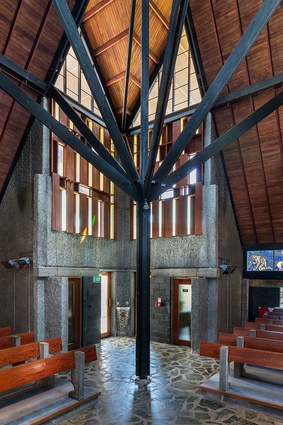 Futuna Chapel, Karori
 Peter Clark