NZSO triumphs with brilliant Beethoven and Brahms masterpieces

New Zealand Symphony Orchestra conducted by Edo de Waart, with violinist Augustin Hadelich

Beethoven: Violin concerto in D, Op 61
Brahms: Symphony No 2 in D, Op 73

Michael Fowler Centre

Saturday 18 August, 7:30 pm

Though this was a very traditional, heart-of-the-classical-world concert which one might have thought would excite neither the aficionados nor the young and innocent in terms of classical music awareness, it was a very near full house – not an every-day experience for the NZSO.

But the fact is that I cannot remember a live performance in Wellington of the Beethoven violin concerto: certainly, a search of Middle C’s archive brings up none. And I had to go back to the NZSO’s Brahms festival in October 2011 to find the last performance of his No 2.

Beethoven Violin Concerto
Though one doesn’t expect a performance of such a familiar concerto to spark excitement, even the orchestral introduction, which was cautious, expectant and dignified, presaged something splendid. It took hold of the audience almost at once, as if the orchestra, as well as audience, knew that they, the orchestra, were harbingers of something special. So the violin’s entry seemed to still the audience immediately, generating the feeling that a definitive, exultant performance was at hand. There is a special kind of silence that takes possession of an audience when faced with something remarkable.

Augustin Hadelich is of German descent, but born in 1984 to a vintner family established in Tuscany. Aged 15, and already a prodigy on both piano and violin, his career was nearly ended in a fire on the family farm. But five years later he had gained entry to the Juilliard School in New York, and won the Indianapolis international Violin Competition.

Hadelich’s playing was marked by calmness, a sense of determination, clear-sightedness. It produced, at the same time, flawless articulation and perfect intonation that almost seemed inconsistent with emotional warmth, and sheer beauty of tone. One expects to enjoy dynamic variety, but what he produced was a sort of flexibility distilled by taste and delicacy, leaving not a hint of indulgence or excess.

One mark of that was in the studied approach with which the cadenza at the end of the first movement began; its emphasis was on the music and its beauties rather than astonishing with tonal brilliance and virtuosity and it cast almost a sense of religious rapture, that was compelling and utterly stilled the audience. Its perfection was almost machine-like if it hadn’t been for the sheer musicality and essential humanity of its expression.

At the movement’s end there was what sounded like some utterly irresistible clapping.

The Larghetto second movement opened in the same spirit of sobriety, stillness that brought the audience once more to a kind of silence that seemed unreal among two thousand people. And the link-passage to the Finale was stripped of the sort of histrionics that its foretelling often brings about in other performances. It was a warning about the astonishing speed and musical force that Hadelich created in this brilliant movement. Its pace scarcely left room to breathe and its remarkable technical demands brought no slackening of pace till the moment when preparation for the Coda arrived, and it led the music through striking modulations, eventually ending, not in any sort of Tchaikovskyan frenzy, but loosening new and sublimely original ideas. And unlike many, he resisted the temptation to bring the spotlight back to himself in the final bars.

It was a performance the like of which I don’t expect to experience, live, ever again.

Paganini’s 24th Caprice was his way of thanking the audience for their immediate, standing ovation (unusual for the reticent Wellington audience), and its incendiary flamboyance and amazing technical embellishments were spell-binding (extraordinarily elaborate left-hand plus right hand pizzicato).

Brahms Second Symphony
Though the first half had created an experience that might have made another major work even after the interval, seem anti-climactic, Brahms second symphony, again in the key of D, survived extremely well. The orchestra expanded from its Beethovenian-numbers to full size, with 16, 14 violins, etc, five horns, but just double woodwinds. If the limelight had not shone much on De Waart in the concerto (and it truly deserved admiration), in the Brahms his unassuming, discreet yet strong and clear presence on the podium inspired the orchestra.

Brahms claimed somewhere that “I have never written anything so sad”; but elsewhere, Brahms is quoted saying it’s “light and carefree, as though written for a young married couple”. Take your pick; I don’t hear anything sad, and suspect that it was Brahmsian irony – opposite to what he felt about it; nor did De Waart seem to feel that way. And one would hardly choose D major to express grief or even melancholy (nor did Beethoven).

Brahms plunges us straight into the music, with no ritual introduction or conspicuous attention to classical forms, though his argument with the Liszts and Wagners was over his belief in the importance of the traditional structures. The performance seemed to draw attention to the endless compounding and modifying of themes, of scraps of themes, with every detail of Brahms’s rich orchestration resulting in a reading that was sympathetic and deeply satisfying.

Though the first movement is Allegro non troppo, there was hardly a strong feeling of speed or liveliness for quite a while. Some of the most beautiful episodes came from horns, sometimes just the principal, Samuel Jacobs; horns in particular seem to define Brahms’s orchestral palette. And there was lovely playing by other winds. The momentum evolved slowly, almost imperceptibly, as the varying facets of its themes and gestures developed organically and a strong feeling of integrity took hold.

The second movement Adagio non troppo (the ‘non troppo’ characterises Brahms’s devotion to the sanguine temperament, the happy medium, rather than emotional extremes) was pensive, expressive, is rarely jocular, and never suggestive of a suppressed Rossini or Offenbach. Yet it became the sort of spirited music that had emerged in the first movement. Both movements seem essential Brahms and one sensed in De Waart a deep sympathy with what Brahms was talking about and feeling.

The movement that might otherwise be the Scherzo, started in a gentle triple time, but very soon a lively 4/8 time, Presto non assai, took over for a short time before a triplet-quaver rhythm brought yet another change of tempo, though not really of mood and musical sense.  The movement’s variety that De Waart handled so deftly was a delight as were interludes by oboes and flutes.

The utter silence before the start of the last movement spoke volumes about the impact this wonderful performance was having on the audience. So as the Allegro con spirito gathered energy, high spirits, and joie de vivre, the full force of the big orchestra seemed to be employed in a spirit of an almost incandescent joy. Beethoven’s Freude in the Ninth Symphony might have found an even truer domicile here at the end of Brahms 2, than in its original incarnation.

This too got an enthusiastic reception from the very large audience.


NZSO in splendid form under Harth-Bedoya with Brahms and Tchaikovsky

New Zealand Symphony Orchestra, conductor Miguel Harth-Bedoya, with Stefan Jackiw (violin)

Brahms & Tchaikovsky
Farr: He iwi tahi tātou
Brahms: Violin Concerto in D, Op.77
Tchaikovsky: Symphony no.4 in F minor, Op.36

Michael Fowler Centre

Saturday, 23 June 2018, 7.30pm

It is always a case of pleasant anticipation when a new Gareth Farr work is to be performed, and this was the case again.  Farr’s piece was commissioned by the NZSO to commemorate the 250th anniversary of Captain Cook’s first landing in this country, which occurs next year (he departed from Britain in 1768).

The title comes from Governor William Hobson’s greeting to Maori chiefs as they came forward to sign the Treaty of Waitangi.  In English it is ‘We are all one people’.  Farr stated in the programme note for this short work ‘It is about the unique cultural diversity and energy that makes this country what it is’.

The piece began with a bouncy, rhythmic background to a cor anglais melody.  Percussion and pizzicato strings sustained the rhythm, then strings switched to bowing followed by a cello quartet.  More volume was created by the brass joining in, and tubular bells.  Drummers had perhaps the most exciting role, and we had some native bird calls from a flute.

There came sounds of military confrontation, doubtless the New Zealand Wars, with gong, side-drum and tuba.  These sounds gradually faded, and the tubular bells returned.  The music ended with a huge blast of sound, perhaps denoting a positive future.

Through many nuances this music spoke, and was splendidly performed by the orchestra.

Brahms
The Violin Concerto is one of the tops in the repertoire.  I know it well through recordings and radio, but have not so often heard it performed live.  Here it was played by young American Stefan Jackiw, of Korean and German heritage.  It was quickly apparent that he is a violinist of great skill and talent.  The music was always beautifully rendered, with attention to detail, beauty of sound, and impeccable tuning and rhythm.  He was deft, and thoroughly on top of the music.  Occasionally, early on, he was overpowered by the orchestra.

He captured beautifully the rather plaintive quality of the solo part in the first movement (allegro ma non troppo).  The large body of orchestral strings were solid and unified, delivering an excellent structure above which the soloist performed brilliantly.  His demanding solo part in this movement was executed with skill and musicality.  The cadenza was thoughtful and subtle, even tender, as well as revealing technical wizardry.  Some of Brahms’s most graceful and memorable music is to be found in this concerto.

Prominent for me in this concerto, despite the magnificent orchestra and violin work, is Brahms’s wonderful writing for woodwind.  This was evident right at the beginning of the first movement.  The second movement (adagio) opened with the wonderful oboe solo, accompanied by the deeper woodwinds and horns.  The violinist takes up the theme and varies it, against a background of quiet strings and haunting woodwind interjections.

The movement develops with increasing brilliance, but that beautiful, nostalgic theme on the oboe returns, with its bassoon accompaniment.  Then the violin rose to an emotional climax and subsided to an exquisite ending.

The mood changes completely in the finale (allegro giocoso, ma non troppo vivace – poco più presto), and we are whirled into a lively Hungarian dance.  The soloist decorates the theme spectacularly.  The dance becomes fast and furious before the end.

Jackiw generously applauded the orchestra, as its members did him, very warmly, while the audience applauded and cheered him heartily.  He played an encore, Largo from a violin sonata by Johann Sebastian Bach.  It was played with beautiful tone and sensitivity; it included some very quiet passages.

Tchaikovsky
The final work was Tchaikovsky’s Fourth Symphony, a work full of fire and passion.  The portentous ‘fate’ motif from the brass at the opening – first trombones and then trumpets play andante sostenuto, but the tempos changes to moderato then later andante again, and finally allegro vivo.  It is a long movement.  The juxtaposition of a wind melody against stuttering strings is a striking touch.  The tuba made itself felt; the whole orchestra blazed forth in a grand manner.

Quiet soon came, with lovely woodwind solo passages that seem to be out of another world from what preceded them.  Strings follow in kind, but the woodwinds have the foreground.  Then it was back to bombast and big themes and gestures for the whole orchestra, and a return of the fateful brass theme.  The full-bodied music returned again.  There were more delicious woodwind and horn solos and ensembles.  A rousing windup ended this monumental movement.  Tchaikovsky was certainly a great orchestrator.

The second movement (andantino in modo canzona) begins with an oboe solo against pizzicato strings.  Cellos then take up this very romantic theme.  Changes of key add to its somewhat mysterious quality.  There are many variations, and as the theme is passed around the orchestra, another theme arises, more playful than the first.  With the addition of brass, it too becomes grand.  The clarinet features, followed by bassoon.

The third movement opens with a long section of magical pizzicato from all the strings, which is interrupted by the woodwinds with a jolly theme, and their echoing the strings’ pizzicato theme.  Finally, it’s the brass’s turn, and the strings pluck again.  The whole is imaginative and effective, with much variation of dynamics.

All join in for the rambunctious finale (allegro con fuoco).  There is a quiet section, and a return of the ‘fate’ theme.  Cymbal claps are part of the dramatic effects that follow, with repetitions of earlier music.  This was an aural spectacle!

Features of the orchestra playing under Harth-Bedoya were delightful pianissimo passages, and plenty of bite and alacrity in the strings.  The orchestra was in splendid form. A shame that there were quite a lot of empty seats downstairs for this concert.


Full house Mulled Wine concert at Paekakariki with NZSM violin and piano stars

Mulled Wine Concerts
Jian Liu (piano) and Martin Riseley (violin)

Bach: Solo Sonata for Violin, BWV 1001
Lilburn: Sea Changes and Violin Sonata
Brahms: Intermezzo in B minor, Op 119 No 1
Grieg: Sonata for Violin and Piano No 3, Op 45

Paekakariki Memorial Hall

Sunday 27 May, 2:30 pm

We’ve sadly missed a couple of earlier Mulled Wine concerts from Paekakariki: the Rodger Fox Jazz Ensemble in January and Toru (the Wellington trio of flute, viola and harp) in March, though we caught up with them at Lower Hutt recently.

This concert was perhaps more than merely a compensation, from two of the distinguished classical performance lecturers at the school of music of Victoria University.

There were three solo pieces: Bach’s solo violin sonata in G minor, BWV 1001, Lilburn’s Three Sea Changes and one of Brahms’s last compositions, an Intermezzo, the first of the four pieces from Op 119.

Bach: Solo violin
The Bach piece famously taxes a violinist, both on account of its technical challenges and its musical substance. Riseley’s playing was not of the sort that makes it look easy, nor was its intellectual character diminished through smoothing out its angularities which are rather audible in the longest movement, the Fuga.

The opening Adagio invites the most profoundly passionate interpretation, making its evolution a uniform process but Riseley almost seemed to allow the creative process behind every phrase to be heard distinctly, as each phrase seemed to be exposed to our examination. The Fuga (‘Fugue’) movement moves more quickly and its pulse carried the performance along in a more flowing and deceptively easy manner. The Siciliana is caste in a complex triple time with a slower pulse, and the violinist here found the opportunity to demonstrate a more lyrical and easy-flowing quality, sometimes almost too disarmingly.

A return to the ‘exercise’ character of the first movement comes with the last movement, simply marked Presto. Incessant semi-quaver triplets offer no relaxation and though obvious hard work lay behind the performance, its relentless pulse demonstrated Riseley’s talent and musical insight clearly.

Lilburn for piano and violin
Jian Liu followed with the first of Lilburn’s Three Sea Changes. One is used to Margaret Nielsen’s playing of these and it was a small revelation to hear something different, invested with the sensibility of pianist of a different ethnic and musical background. It was both polished and invested with a musical spirit that was European – perhaps of a Debussy-derived character. I must get to hear his playing of all three, and I hope Jian Liu is encouraged to lay down his own performances of Lilburn’s large piano oeuvre.

Liu’s other solo piece was the first Intermezzo of Brahms’s set of four piano pieces, Op 119 (there are around 20 intermezzi, most of them written in his last years, after overturning his earlier decision to retire completely). Affection for them, as with most of Brahms, simply increases with age (so there’s no need to worry!). The programme note took the trouble to reproduce Brahms’s sweet remarks to Clara Schumann about this particular one. It went so: “The little piece is exceptionally melancholic and ‘to be played very slowly’ is not an understatement. Every bar and every note must sound like a ritard[ando], as if one wanted to suck melancholy out of each and every one, lustily and with pleasure out of these very dissonances!”  It didn’t strike me like that, apart from the tendency to ritardando, and this beautiful performance certainly didn’t induce dangerous melancholy.

Martin Riseley returned to play Lilburn’s 1950 Violin Sonata (and what a pity Lilburn wasn’t surrounded by audiences calling for more chamber music; instead he was encouraged to pursue musique concrète).

I might remark here on the violin that he used. It was a 19th century German instrument on loan from Kapiti resident Bill McKeich (He was the leader of the orchestra at Wellington College in which I played the cello; we were in the same form in the upper 6th). It produced a comforting, warm sound, and here it created music that seemed more quintessentially Lilburn than one sometimes hears.  The notion had not occurred to me before that there was a Schumannesque character in this music, or at least in this performance; once such an idea arises, it’s easy to hear it confirmed as the music goes on. So, as a particularly irrational Schumann lover, I found more delight in Riseley’s playing in this piece than I have before.

Grieg’s third violin sonata
Finally, the major work in the concert, Grieg’s third violin sonata, an old favourite. I recall first hearing it at a chamber music concert in Taumarunui in …(long ago), where I was posted ‘on section’ while at Auckland Teachers’ College. (Taumarunui High School was a sought-after school because of the Whakapapa ski field; as a self-indulgent aside, poking about the music department I came across 78 rpm recordings of Roy Harris’s famous Third Symphony which struck me as remarkable in a secondary school; I suspect scarcely anyone has even heard of it today).

Anyway, the best known of Grieg’s sonatas is not much heard these days, even in towns 50 times the size of Taumarunui. So to hear it with the sound of the sea close by was a delight, not to mention the excellence of the performance, which was quite passionate, interspersed with gentle and sometimes quite prolonged lyrical passages. The partnership itself was a thing to delight in as one’s attention shifted from one to the other, the music seeming to breathe in response to its own pulse and mood from bar to bar.

Jian Liu’s playing was both elegant and deeply attuned to the spirit and poetic quality of the music, while Martin Riseley’s playing often felt as if he was observing the music from the outside yet was able to capture the whole-heartedness and complex lyricism of Grieg’s composition. The slow movement speaks so clearly in Grieg’s language, that blend of sentiment and a northern reserve; so that the music has a changeable atmosphere, alternating between E major and minor, refusing to commit to either.  And the duo captured the qualities of the last movement, Allegro animato, mixing freshness and thoughtfulness that always demanded admiration, for both the complementary elements of their styles and the fluency of their playing.

And after rather protracted applause, the duo returned and uncovered another score on their music stands; it was Tchaikovsky’s Serenade Melancholique, Op 26, demonstrating their ability to give genuinely pathetic utterance to the sort of sadness that Tchaikovsky created so movingly.

There was a predictably full house in the hall by the sea. The inducement consists in more than just the free mulled wine in the interval; it’s definitely worth more than merely a detour.


Vivaldi triumphs in the NZSO’s Italian celebration

The New Zealand Symphony Orchestra presents:
VIVALDI – The Four Seasons Op.8 Nos 1-4 *
BERLIOZ – Roman Carnival Overture Op. 9
RESPIGHI – Pini di Roma (Pines of Rome) 1924 **

Angelo Xiang Yu (violin) *
Brett Mitchell (conductor)

New Zealand Symphony Orchestra
Members of the Wellington Brass Band**

MIchael Fowler Centre,
Wellington

Saturday, 12th May 2018

What a boringly predictable world it would be if everything in it turned out as one anticipated! I sat pondering this earth-shattering truism during the interval of Saturday evening’s NZSO concert in the wake of the most inspiring and life-enhancing performance of Antonio Vivaldi’s “The Four Seasons” I’ve heard since first encountering New Zealand violinist Alan Loveday’s now-legendary recording of the work with Neville Marriner’s Academy of St.Martin-in-the-Fields, from the 1970s. Just as that performance blew away the cobwebs and reinvented the work for its time, so did Angelo Xiang Yu’s absolutely riveting playing of the solo violin part and the NZSO players’ galvanic response do much the same for me on this occasion, in the concert hall.

In fact I was expecting very little to come from this, my latest encounter with the work, for the simple reason that I’d heard it played on record so many times and, of course, misappropriated over the years in a thousand different ways – could I face the prospect of those Bremworth Carpet TV ads of the 1960s coming back to haunt me yet again? I felt somewhat “jaded” at the thought of it all, and had difficulty imagining what yet another performance would bring to the music that could be of any new and compelling interest.

My focus in the concert itself on this occasion was firmly centred on what I expected would be the evening’s highlight, Respighi’s Pini di Roma (Pines of Rome), a work I’ve remained violently in love with ever since being “blown away” by my first hearing of the work in concert, some time during the 1970s. And Berlioz’s music, too, had become something of a passion for me, ever since my somewhat bemused initial encounter with an LP containing a number of “Overtures” all of which seemed distinctly odd-ball, the music volatile and angular, though strangely compelling – I persisted, and grew to love their idiosyncrasies, attracted by the composer’s uninhibited use of dynamic and spontaneous contrasts between sheer brilliance and ravishing beauty.

“Lord, what fools we mortals be…” wrote some obscure playwright or other; and my expectations of what I would cherish from the experience of hearing this particular concert were completely confounded, almost right from the first note of the Vivaldi work. I listened to the thistledown-like opening, and straightaway pricked up my ears at its wind-blown, spontaneous-sounding quality, replete with inflections of phrasing and dynamics that suggested the musicians seemed to really “care” about the music.

Both Angelo Xiang Wu and conductor Brett Mitchell readily encouraged the playing’s “pictorial” effects suggested by the music’s different episodes, which followed the descriptions written in a set of poems, presumably also by the composer, which were intended to give listeners precise detailings of what the music is actually “about” – unfortunately these weren’t reproduced in the written programme. I thought I’d go a little way towards making good the omission, by including the English version of the verses that accompanied the opening Concerto, “Spring”.

Allegro
Springtime is upon us.
The birds celebrate her return with festive song,
and murmuring streams are softly caressed by the breezes.
Thunderstorms, those heralds of Spring, roar, casting their dark mantle over heaven,
Then they die away to silence, and the birds take up their charming songs once more.
Largo
On the flower-strewn meadow, with leafy branches rustling overhead, the goat-herd sleeps, his faithful dog beside him.
Allegro
Led by the festive sound of rustic bagpipes, nymphs and shepherds lightly dance beneath the brilliant canopy of spring.

Thus we heard the brilliant birdsong, shared and echoed between the soloist and the leaders of each of the two violin sections  – enchanting! The “thunderstorms” were allowed their full dynamic effect, with the playing almost “romantic” in its flexibility of phrasing and pulse, very free and spontaneous-sounding. In the slow movement, the exquisitely-moulded ensemble textures beautifully “caught” the rustic beauty of the “leafy branches” over the “flower-strewn meadow”, with a doleful, repeated viola note depicting a dog’s disconsolate barking besides its sleeping master. Angelo Xiang Yu’s delicious and freely “pointed” solo playing then beautifully complemented the “festive sound of rustic bagpipes”, the playing by turns jaunty and gently yielding in its “end-of-day” ambience.

From this the playing and its “engagement factor” simply went from strength to strength throughout each of the remaining concerti. The opening of “Summer” brought forth sounds whose charged, anxious quality was almost portentous in its impact, which the furious beginning of the allegro vividly supported. Together with Andrew Joyce’s solo ‘cello-playing, Xiang Yu’s violin vividly conveyed the restless quality engendered by the heat, and the growing fearfulness caused by the oncoming storm, the players relishing the adagio/presto alternations of the middle movement, depicting flies, gnats and the oncoming tempests. And the concluding presto was quite simply a tour de force of sound and fury, the notes flailing and stinging in a tremendous display of both virtuosity and focused interpretative intent.

“Autumn” afforded us considerable relief on this occasion, the opening jolly and bucolic, the interactions between solo violin and the ‘cello again delightful with  Xiang Yu’s playing exhibiting such characterful humour in places (in fact I couldn’t help chortling out loud at his impish hesitations at one point, which, I’m sorry to say, startled my concert neighbour!). And while, throughout the slow movement, we got nothing like violinist Nigel Kennedy’s infamous “nuclear winter” realisation in his 1989 recording (he’s recorded a more recent version, incidentally, called “Vivaldi – the New Four Seasons” one even more “interventionist”, for those who crave adventure!), the “sleep without a care” sentiments of Vivaldi’s poetry was certainly given instrumental voice from all concerned. Afterwards, as befitted the refreshment sleep gave, the music awoke to plenty of bounce and energy – fortunately, the musical depictions of the hunters harrying their unfortunate prey weren’t as graphic and piteous as the poem’s words suggested.

Came Winter, with its bleak, spectral timbres suggesting snow and ice – I loved the palpable “shudder” with which Xiang Yu concluded each of his opening “shivering” solo flourishes, and enjoyed the dramatic crescendi generated by both the violinist and the ensemble as the movement ran its course. The Largo gently scintillated via delicate pizzicato strings and Douglas Mews’ crisp harpsichord continuo playing, as the violin sang of the joys of contented rest by the fire, though the final movement returned us to the elemental fray, via the “icy path” and the “chill north winds”,  if not without some brief reflection on winter’s “own delights”. However, those same chill winds had the last word, the soloist conjuring up a mini-tempest which the ensemble catches onto, driving the music to a brilliant, no-nonsense conclusion!

I never expected to write so much about this performance, but I simply had to try and convey something of the thrill of engagement with the music-making that I felt, all the more telling for me through its unexpectedness, of course! After deservedly tumultuous applause, Xiang Yu came back and played us, unaccompanied, some Gluck, the Melodie from Orfeo et Euridice, the playing evoking its own unique world of stillness and resignation.

Undoubtedly the stunning impact of this first half went on to play some part in my reaction to what followed – and I did think that, for all its merits, the performance of Berlioz’s most well-known Overture , Roman Carnival (Le Carnaval Romain) never quite attained that level of focused intensity which made the Vivaldi such a gripping experience. For me the most memorable moments were the lyrical sequences which dominated the overture’s first half, including a lovely cor anglais solo, played here by Stacey Dixon – whose name wasn’t listed among the NZSO players in the programme. The more energetic episodes in the piece’s second half were delivered with skill and polish, but I felt that the music’s dangerous “glint” and sense of “edge” hadn’t entirely escaped the comfort zone, so that we weren’t lifted out of our seats and carried along amid waves of wild exuberance – the efforts of the percussion, for instance, I thought wanted more ring and bite (though partly a fault of the MFC’s acoustic difficulty in  effectively “throwing” the sounds from the rear of the orchestral platform up and into the audience’s spaces).

Having said all of this, the spectacular opening of Respighi’s Pini di Roma (Pines of Rome), had plenty of impact, conductor Brett Mitchell keeping the music’s pulses steady, thus allowing the players space in which to generate plenty of weight of tone, and flood the ambiences with that barely-contained sense of excitement suggested by the opening Pines of the Villa Borghese. As the tempi quickened, everything came together in a great torrent of sound, as overwhelming in its insistence as tantalising in its sudden disappearance, leaving a vast, resonating space of darkness and mystery.

Conductor and players here enabled those spaces to be filled with properly subterranean sounds of breath-taking quality, as if the earth itself was softly resonating with its own music – strings, muted horns and deep percussion allowed winds to intone chant-like lines as if we could hear the voices of dead souls who were continuing to plead for salvation, music of Pines near a Catacomb. An off-stage trumpeter (Michael Kirgan) delivered a faultlessly beautiful recitative from the distance, just before the chant-like music seemed to us to swell up from underground and raise a mighty edifice of sound, capping it with a terrific climax!

From the fathomless gloom of the aftermath came pinpricks of light in the magical form of piano figurations, awakening the chaste limpidity of a clarinet solo, floated with fairytale enchantment by Patrick Barry and carried on by the oboe and solo ‘cello amid great washes of impressionistic hues and colours – Holst, Debussy. Ravel and Richard Strauss were all there, amongst the Pines of the Janiculum! – the reappearance of the clarinet brought forth the nightingale’s song to charm and enthrall us just before the onset of distant warlike sounds, a steady, remorseless tramping of marching feet whose purposeful trajectories announced the coming of the Emperor’s legions, passing the Pines of the Appian Way en route to the Capitoline Hill.

For this performance the NZSO enjoyed the sterling services of a number of players from the Wellington Brass Band, whose body of tone with that of the full orchestra’s at the piece’s climax had an almost apocalyptic (I almost wrote “apoplectic”!) effect! A pity, though, I thought, that those first distant trumpet calls couldn’t have been that much more more spatially placed, perhaps made from offstage, to give an even greater sense of distance and expectation and impending glory at the climax. As he’d done throughout, Brett Mitchell controlled both momentums and dynamics with great tactical and musical skill, holding the legions in check until they actually swung into view in the mind’s eye, and came among us, amid scenes of incredible splendour and awe. Respighi actually wanted the ground beneath his army’s feet to tremble with the excitement of it all, and conductor and players triumphantly achieved that impression over the piece’s last few tumultuous bars! Bravo!


Two resounding recordings from Rattle – classics and a feisty newcomer


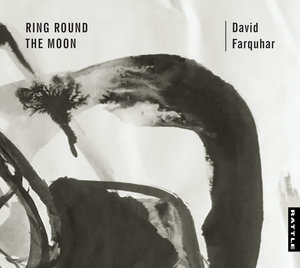
DAVID FARQUHAR – RING ROUND THE MOON
Sonatina – piano (1960) / Three Pieces – violin and piano (1967)
Black, White and Coloured – solo piano (selections – 1999/2002)
Swan Songs for voice and guitar (1983)
Dance Suite from “Ring Round the Moon” (1957 arr. 2002)
Jian Liu (piano) / Martin Riseley (violin)
Jenny Wollerman (soprano) / Jane Curry (guitar)
Rattle RAT-D062 2015

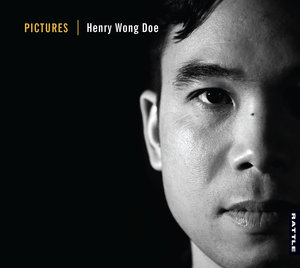
PICTURES
MODEST MUSSORGSKY – Pictures at an Exhibition
EVE De CASTRO ROBINSON – A Zigzagged Gaze
Henry Wong Doe (piano)
Rattle RAT-D072 2017

How best does one describe a “classic” in art, and specifically in music?

Taking the contents of both CDs listed above, one might argue that there are two “classic” compositions to be found among these works, one recognised internationally and the other locally, each defined as such by its popularity and general recognition as a notable piece of work. If this suggests a kind of facile populist judgement, one might reflect that posterity does eventually take over, either continuing to further enhance or consigning to relative neglect and near-oblivion the pieces’ existence in the scheme of things.

Though hardly rivalling the reputation and impact in global terms of Modest Mussorgsky’s remarkable Pictures at an Exhibition on the sensibilities of listeners and concert-goers, it could safely be said that New Zealand composer David Farquhar’ s 1957 incidental music for the play Ring Round the Moon has caught the imagination of local classical music-lovers to an extent unrivalled by any of the composer’s other works, and, indeed by many other New Zealand compositions. I would guess that, at present, only certain pieces by Farquhar’s colleague Douglas Lilburn would match Ring Round the Moon in popularity in this country, amongst classical music aficionados.

The presence of each of these works on these recordings undoubtedly gives the latter added general interest of a kind which I think surely benefits the lesser-known pieces making up each of the programmes. In both cases the combinations are beautifully thought-out and judiciously placed to show everything to its best possible advantage. And visually, there’s similar accord on show, the art-work and general layout of each of the two discs having its own delight and distinction, in the best tradition previously established by the Rattle label.

So enamoured am I still with Farquhar’s original RIng Round the Moon for small orchestra (that first recording featuring the Alex Lindsay Orchestra can be found by intrepid collectors on Kiwi-Pacific Records CD SLD-107), I thought I would give myself more time to get used to the idea of a violin-and-piano version (arranged by the composer in 1992). I therefore began my listening with the more recent disc, Pictures, featuring pianist Henry Wong Doe’s enterprising coupling of Mussorgsky’s Pictures at an Exhibition and a 2016 work by Auckland composer Eve de Castro-Robinson, A zigzagged gaze, one which similarly presents a series of musical responses to a group of visual artworks.

Mussorgsky’s collection of pieces commemorated the work of a single artist, Victor Hartmann, a close friend of the composer, whereas de Castro-Robinson’s series of pieces, commissioned by the pianist, were inspired by work from different artists in a single collection, that of the Wallace Arts Trust. In the booklet notes accompanying the CD the composer describes the process of selecting artworks from the collection as “a gleeful trawling through riches”. And not only does she offer a series of brief but illuminating commentaries regarding the inspirational effect of each of the pictures, but includes for each one a self-written haiku, so that we get a series of delightfully-wrought responses in music, poetry and prose.

Henry Wong Doe premiered de Castro Robinson’s work, along with the Mussorgsky, at a “Music on Madison Series” concert in New York on March 5th 2017, and a month later repeated the combination for the New Zealand premiere in Auckland at the School of Music Theatre. His experience of playing this music “live” would have almost certainly informed the sharpness of his characterisations of the individual pieces, and their almost theatrical contrasts. For the most part, everything lives and breathes, especially the de Castro Robinson pieces, which, of course, carry no interpretative “baggage” for listeners, unlike in the Mussorgsky work, which has become a staple of the virtuoso pianist repertoire.

While not effacing memories of some of the stellar recorded performances of the latter work I’ve encountered throughout the years, Wong Doe creates his own distinctive views of many of the music’s sequences. He begins strongly, the opening “Promenade” bright, forthright, optimistic and forward-looking, evoking the composer’s excitement and determination to get to grips with the business of paying tribute to his artist friend, Viktor Hartmann whose untimely death was commemorated by an exhibition of his work.

The pianist relishes the contrasts afforded by the cycle, such as between the charm of the Tuileries scene with the children, and the momentously lumbering and crunching “Bydlo” which immediately follows. He also characterises the interactive subjects beautifully – the accents of the gossipping women in “The Market-Place at Limoges” tumble over one another frenetically, while the piteous cries of the poor Jew in “Samuel Goldenberg and Schmuyle” are sternly rebuffed by his well-heeled, uncaring contemporary.

I liked Wong Doe’s sense of spaciousness in many places, such as in the spectral “Catacombs”, and in the following “Con Mortuis in lingua mortua” (the composer’s schoolboy Latin still manages to convey a sense of the transcendence he wanted) – the first, imposing part delineating darkness and deathly finality, while the second part creating a communion of spirits between the composer and his dead artist friend – Wong Doe’s playing throughout the latter properly evoked breathless beauty and an almost Lisztian transcendence generated by the right hand’s figurations.)

Only in a couple of places I wanted him to further sustain this spaciousness – steadying a few slightly rushed repeated notes at the opening of the middle section of “Baba Yaga”, and holding for a heartbeat or so longer onto what seemed to me a slightly truncated final tremolando cadence right at the end of “The Great Gate of Kiev”. But the rest was pure delight, with the fearful witch’s ride generating both properly razor-sharp cries and eerie chromatic mutterings along its course, and the imposing “Great Gate” creating as magnificent and atmospheric a structure of fanciful intent as one would wish for.

Following Mussorgsky’s classic depiction of diverse works of art in music with another such creation might seem to many a foolhardy venture, one destined to be overshadowed. However, after listening to Wong Doe’s playing of Auckland composer Eve de Castro Robinson’s 2016 work, A Zigzagged Gaze, I’m bound to say that, between them, composer and pianist have brought into being something that can, I think, stand upright, both on its own terms and in such company. I listened without a break to all ten pieces first time up, and, like Mussorgsky at Viktor Hartmann’s exhibition, found myself in a tantalising network of connection and diversity between objects and sounds all wanting to tell their stories.

The work and its performance here seems to me to be a kind of celebration of the place of things in existence – the ordinary and the fabulous, the everyday and the special, the surface of things and the inner workings or constituents. As with Mussorgsky’s reactions to his artist friend Hartmann’s creations, there’s both a “possessing” of each work’s essence on de Castro-Robinson’s part and a leap into the kind of transcendence that music gives to things, be they objects, actions or emotions, allowing we listeners to participate in our own flights of fancy and push out our own limits of awareness.

As I live with this music I’m sure I’ll develop each of the composer’s explorations within my own capabilities, and still be surprised where and how far some of them take me. On first hearing I’m struck by the range of responses, and mightily diverted by the whimsy of some of the visual/musical combinations – the “gargantual millefiori paperweight” response to artist Rohan Wealleans’ “Tingler” in sound, for example. I’m entertained by the persistent refrains of Philip Trusttum’s “The Troubadour”, the vital drollery of Miranda Parkes’ “Trick-or-Treater” and the rousing strains of Jacqueline Fahey’s “The Passion Flower”. But in other moods I’ll relish the gentle whimsicalities inspired by Josephine Cachemaille’s “Diviner and Minder” with its delight in human reaction to small, inert things, and the warm/cool beauties of Jim Speers’ “White Interior”, a study of simply being.

Most haunting for me, on first acquaintance, however, are “Return”, with Vincent Ward’s psychic interior depiction beautifully reflected in de Castro Robinson’s deep resonances and cosmos-like spaces between light and darkness, and the concluding tranquilities of the initially riotous and unequivocal rendering of Judy Miller’s “Big Pink Shimmering One”, where the composer allows the listener at the end space alone with oneself to ponder imponderables, the moment almost Rimbaud-like in its powerful “Après le déluge, c’est moi!” realisation.

Henry Wong Doe’s playing is, here, beyond reproach to my ears – it all seems to me a captivating fusion of recreativity and execution, the whole beautifully realised by producer Kenneth Young and the Rattle engineers. I can’t recommend the disc more highly on the score of Eve de Castro-Robinson’s work alone, though Wong Doe’s performance of the Mussorgsky is an enticing bonus.

Turning to the other disc for review, one featuring David Farquhar’s music (as one might expect of a production entitled “Ring Round the Moon”) I noted with some pleasure that the album’s title work was placed last in the programme, as a kind of “all roads lead to” gesture, perhaps to encourage in listeners the thought that, on the face of things, the journey through a diverse range of Farquhar’s music would bring sure-fire pleasure at the traversal’s end.

Interestingly, the programme replicates a “Remembering David Farquhar” concert on the latter’s seventh anniversary in 2014, at Wellington’s NZSM, curated by Jack Body and featuring the same performers – so wonderful to have that occasion replicated here in preserved form. The disc is packaged in one of Rattle’s sumptuously-presented booklet gatefold containers, which also features details from one of artist Toss Woolaston’s well-known Erua series of works, and a biography of the artist.

Beginning the disc is Sonatina, a work for solo piano from 1950, which gives the listener an absorbing encounter with a young (and extremely promising) composer’s music. Three strongly characterised movements give ample notice of an exciting talent already exploring his creativity in depth. Seventeen years later, Farquhar could confidently venture into experimental territory with a Sonata for violin and piano which from the outset challenged his listeners to make something of opposing forces within a work struggling to connect in diverse ways. A second movement dealt in unconventionalities such as manipulating piano strings with both fingers and percussion sticks, after which a final movement again set the instruments as much as combatants as voices in easy accord.

The Black, White and Coloured pieces for piano, from 1999-2002, are represented in two selections on the disc – they represent a fascination Farquhar expressed concerning the layout of the piano keyboard, that of two modal sets of keys, five black and seven white. By limiting each hand to one mode Farquhar created a kind of “double” keyboard, with many opportunities for colour through interaction between the two “modes”. Altogether, Farquhar had twenty-five such pieces published in 2003.

I remember at the NZSM concert being less than enamoured of these works, thinking then that some of the pieces seemed too skeletal and bloodless compared with the originals, especially the settings of Negro Spirituals – but this time round I thought them enchanting, the “double harmonied” effect producing an effect not unlike Benjamin Britten’s treatment of various English folk-songs. A second bracket of these pieces were inspired by diverse sources, among them a Chopin Mazurka, a Landler from a Mahler Symphony, and a theme from a Schubert piano sonata, among others. Again I thought more highly of these evocations this time round, especially enjoying “Clouds”, a Debussy-like recreation of stillness, stunningly effective in its freedom and sense of far-flung purpose.

Swan Songs is a collection of settings which examines feelings and attitudes relating to existence and death, ranging from fear and anxiety through bitter irony to philosophical acceptance, using texts from various sources. Written originally for baritone voice and guitar in 1983, the performances I’ve been able to document have been mostly by women, with only David Griffiths raising his voice for the baritonal record. Here, as in the NZSM Memorial concert, the singer is Jenny Wollerman, as dignified and eloquent in speech as she is in song when delivering the opening “The Silver Swan” by Orlando Gibbons (it’s unclear whether Gibbons himself wrote the song’s words or if they were penned by someone else). Throughout the cycle, Jane Curry’s beautiful guitar-playing provides the “other half” of a mellifluous partnership with both voice and guitar gorgeously captured by producer Wayne Laird’s microphones.

Along with reiterations of parts of Gibbons’ work and a kind of “Swan swan” tongue-twister, we’re treated to a setting by Farquhar of his own text “Anxieties and Hopes”, with guitarist and singer interspersing terse and urgent phrases of knotted-up fears and forebodings regarding the imminence of death. As well, we’re served up a setting of the well-known “Roasted Swan” sequence from “Carmina Burana”, Jenny Wollerman poignantly delineating the unfortunate bird’s fate on the roasting spit. As in the concert presentation I found the effect of these songs strangely moving, and beautifully realised by both musicians.

As for the “Ring Round the Moon” set of dances, I suspect that, if I had the chance, I would want to hear this music played on almost any combination of instruments, so very life-enhancing and instantly renewable are its energies and ambiences. I’m therefore delighted to have its beauties, charms and exhilarations served up via the combination of violin and piano, which, as I remember, brought the live concert to a high old state of excitement at the end! And there’s a lot to be said for the process of reinventing something in an unfamiliar format which one thinks one already knows well.

What comes across even more flavoursomely in this version are the music’s angularities – though popular dance-forms at the time, Farquhar’s genius was to impart the familiar rhythms and the easily accessible tunes with something individual and distinctive – and the many touches of piquant harmony, idiosyncratic trajectory and impish dovetailing of figuration between the two instruments mean that nothing is taken for granted. Martin Riseley and Jian Liu give masterly performances in this respect – listen, for example, to the ticking of the clock leading into the penultimate Waltz for a taste of these musicians’ strength of evocation! Only a slight rhythmic hesitation at a point midway through the finale denies this performance absolutely unreserved acclaim, but I’m still going to shout about it all from the rooftops, and challenge those people who think they “know” this music to try it in this guise and prepare to be astounded and delighted afresh.

Masterly playing of Bach’s first sonata and partita from Martin Riseley

St Andrew’s lunchtime concerts
Martin Riseley (violin)

J S Bach: Solo Violin Sonata No 1 in G minor, BWV 1001
and Partita No 1 in B minor, BWV 1002

St Andrew’s on The Terrace

Wednesday 14 February, 12:15 pm

It takes other professional and voluntary organisations a long time to organise a few concerts drawing mainly on New Zealand musicians. But impresario extraordinaire Marjan van Waardenberg probably spends a good deal of the summer, putting together something approaching 50 concerts – one a week – at St Andrew’s; perhaps more than all the other chamber music organisers in Greater Wellington combined. They have become an important institution in Wellington’s musical life, providing a down-town venue for students at Victoria University’s school of music as well as a way for established musicians to remain in the public eye.

I gather she has concerts pretty well finalised for the whole year.

As well as offering surprisingly accomplished student performances, we also get to hear top-class professionals in music that is often overlooked by the mainstream promoters.

Bach’s six solo violin works are a case; we hear the cello suites from time to time, and certain of the keyboard suites and partitas but the violin sonatas and partitas, apart from familiar ones like the 3rd partita, seem neglected.

Martin Riseley is Associate Professor and head of strings in the university school of music; in addition he has recently reconnected with Christchurch where he began his tertiary violin studies in the 1980s, becoming Concert Master of the Christchurch Symphony Orchestra.

Both the first and second violin sonatas and partitas are in minor keys which indeed seem to lend them a more solemn, less sunny aspect. But as with most music that has less immediate appeal, they all reveal their beauties and musical strengths, slowly, after a few hearings, and I guess my tally is far more than that.

The opening Adagio of the G minor sonata really set the tone of Riseley’s performance, not revealing much lyrical, legato character, but rather his care with detailed articulation that captured its intensely elegiac tone. Fugue is the title of the second movement; on the violin it is a counter-intuitive process, but his playing showed how clearly its fugal character can be heard as well as its strong rhythmic character. The third movement, Siciliana, is laid out to present marked contrasts between phrases on the G string and those on the high strings, which Riseley handled in an easy swaying rhythm. And he drove through the Presto finale, leaning on the first beat of the bar in clean, energetic playing.

Partita No 1, is fundamentally in four movements, but it becomes eight as each is followed by a ‘Double’, or a variation, though it’s sometimes hard to identify aspects of the basic theme since the Doubles dwell on the bass line of the movement itself. So this Partita is about twice the length of the Sonata. The first movement is an Allemanda (Bach uses French and Italian terms seemingly randomly) is marked by double dotted motifs, that explore the violin’s full range, and its complexity always strikes one as particularly profound; its ‘Double’ is brisker and more legato and flowing in style. The Corrente is faster, in triple time, and more sanguine than the first movement, but the real quick movement of the suite is its Double, that Riseley played brilliantly at almost twice the speed of the Corrente itself.

The slow movement is the grave, triple time Sarabanda with routine double stopping that sometimes seems de trop; the following Double is again quicker, more sanguine and flowing. Then comes the last movement, marked Tempo di bourée, a movement that is probably more familiar than most of the others. And its Double is in a flowing rhythm that doesn’t seek to startle, and Riseley handled its long-breathed lines unostentatiously, not attempting to mitigate the pervasive B minor tonality that has generally cast its sombre mood over the whole work.

Martin Riseley’s masterly playing has whetted our appetite to hear all six sonatas and partitas. I wondered to Marjan afterwards whether this was the first of three St Andrew’s recitals for Riseley to play all these great works; she thought not, for now, but agreed it should be done.

Edo de Waart and NZSO in deeply assimilated music of Brahms, Wagner and Sibelius (with Janine Jansen)

New Zealand Symphony Orchestra
Conductor: Edo de Waart with Janine Jansen – violin

Brahms: Symphony No 3 in F, Op 90
Wagner: Siegfried Idyll
Sibelius: Violin concerto in D minor, Op 47

Michael Fowler Centre

Friday 10 November, 6:30 pm

The programme might have looked fairly conventional, except that the symphony, usually the sole occupant of the second half of the traditional concert, was played first. That may have been because the Sibelius concerto enjoys one of the most exciting endings while Brahms’s Third Symphony is a favourite as a result of its steering a path between peacefulness and joy and quiet drama, ending with one of most reflective, serene finales.

Brahms No 3
Generally, De Waart and the orchestra demonstrated a profound sympathy with the symphony: an awareness of its sanguinity as well as its suppressed passion, in a performance that struck one as authentic and deeply assimilated, from a descendant of performances by De Waart’s compatriots, Mengelberg, Van Beinum, Haitink (though not all are unreservedly admired in this symphony…).  So it’s perhaps a little strange that I noted in the first movement, early on, a certain instability in handling the elusive rhythms, and perhaps in ensemble, particularly among the winds.

The symphony’s laid-back nature doesn’t mean any departure from Brahms’s structural complexity that, on the one hand, can be overlooked in a conscious sense without loss of enjoyment, and on the other can engross the serious listener with score and analytical notes at hand.

There were many felicities in the course of the performance, momentary unstable passages that were elucidated by giving prominence to a few notes or by the emergence of flutes or violas from the orchestral aggregate; a fragile rhythm, nicely managed without simplifying it.

The third movement, Poco allegretto, where a scherzo would normally be, was yet another departure from the orthodox, in C minor, 3/8 time (though they’re very slow quavers), De Waart was unhurried, almost somnolent, passing the lovely main theme repeatedly through strings and winds – exquisitely with horns; it might be tedious in less inspired hands: not here.

The sense of a driving impulse was a major feature of De Waart’s performance, through the numerous tempo and rhythmic changes, that hold one’s attention, absorption in the music. But the result of such impulse is sometimes to overlook the epic grandeur of the work which exists in certain deeply admired recordings (Haitink, Sanderling, Giulini for example), that run to around 50 minutes. This was not a performance of that kind, but one for immediate consumption bearing in mind an audience that might not be ready to give itself to playing devoted to architectural magnificence on the scale of a mighty Gothic cathedral.

Siegfried Idyll 
The Siegfried Idyll followed after the interval, excellent tonic for those who have succumbed to anti-Wagner xenophobia. It needs to be stressed, as I sometimes do to non-believers, that it’s just a small part of the 16-hours of the marvellous Ring cycle where hours of comparable beauties are to be found.

The orchestra was stripped back to ten first violins, descending to four basses and single winds apart from pairs of horns and clarinets. That was Wagner’s published expansion from the small group of 13 that had gathered at dawn on the stairs near Cosima’s bedroom to mark her birthday/Christmas morning in 1870 in their house at Triebschen on Lake Lucerne (yes, I’ve been there on a lovely summer’s day). It was beautifully paced, a sort of aubade, with the scent of a calm night, with elegant, perfectly integrated strings; and an arresting moment from Michael Kirgan’s trumpet.

Sibelius Violin Concerto
Janine Jansen is a Dutch violinist, born in 1978 (the ritualised patterns of artist CVs ignore basic information that is likely to be interesting and pertinent to most concert-goers). She is clearly among the most distinguished of the increasingly large body of brilliant soloists in the classical music world.

Her Sibelius concerto was part of a uniquely refined, perceptive, passionate, imaginative and simply enchanting performance which had the characteristically restrained Wellington audience jumping to its feet, accompanied by prolonged shouts and clapping.

The concerto opened with fairy-like, whispering sounds over pianissimo murmuring strings, that were quickly echoed by Patrick Barry’s comparably fastidious clarinet. The prevailing character of her playing was soon clear: an almost obsessional care with every phrase and a delight in highlighting contrasts that are often handled in a more uniform manner. An early fiery passage that ends suddenly with rising, meandering, pianisssimi theme, that seemed to be delivered with more dramatic contrast than is common. At the heart of the first movement, rather than towards the end, the violin’s cadenza becomes a more central feature than usual, described as assuming the role of the development section rather than merely a spectacular forerunner to the climactic conclusion.

Though Sibelius never allows you to become comfortable with a particular emotion, tempo, style, world-view or belief system, and in every movement the listener runs the gauntlet, it’s the slow movement, Adagio di molto, that approaches a miracle of calm, transcendent beauty. It seems to seek the elusive idea of the sublime, but coloured by unease, evoking the still, Arctic air; and there’s a yearning quality, a sense of loss in through the singular emotional force with which the violin speaks. Jansen dealt enchantingly with the passages where she was virtually alone as sections of the orchestra murmured discreetly, merely embellishing the silence.

Though one knows the concerto very well, I have never been held so transfixed, so alert, so awakened to sounds that I seemed never to have heard properly before. The last movement can suggest a fairly conventional affair, boisterous and exciting, but Jansen’s playing was variously mercurial and endlessly lyrical; it was energised in throbbing exchanges with the orchestra, which was probably inspired by the soloist to sonorities and detail that were comparably dynamic, emerging with unusually clarity. That is a feat that’s perhaps not so hard to achieve given Sibelius’s uncluttered scoring, and a general avoidance of dense, Brahms-like expression.

On every level, this was a remarkable and memorable performance.

A somewhat impromptu lunchtime recital proves a delight at St Andrew’s

Fleur Jackson (violin), Olivia Wilding (cello), Lucy Liu (viola), Ingrid Schoenfeld and Catherine Norton (piano)

Beethoven: Piano sonata in C minor, Op 30/2, movements I and 3
Schumann: Cello Concerto in A minor, Op 129 – arranged for cello and piano, movements 2 and 3
Bloch: Suite (1919) for viola and piano, movements 2, 3, 4

St Andrew’s on The Terrace

Wednesday 9 November, 12:15 pm

Having left the reviewing duty unplanned, both Lindis Taylor and I found ourselves at this recital, mutually unaware of each other at the time; we decided to combine our impressions. Prizes (a free annual pass for the St Andrew’s lunchtime concerts in 2018) for successful identification of the origin of the various remarks.

This programme was arranged at short notice after the originally scheduled players withdrew. Three separate duos, it proved very engaging, even though each pair played only some of the three or more movements. In principle, one should regret that such truncations are made, as they distort in some way the composer’s original intention. In the circumstances however, and given how well each piece was played, it was an interesting and musically satisfying recital.

The first performers began Beethoven’s none-too-easy Allegro con brio first movement with excellent attack, beautifully integrated. The lively staccato character of the music seemed to belie its minor key; Ingrid Schoenfeld’s lively, ear-catching piano and the bright, buoyant sound of Fleur Jackson’s violin, spiced with well-placed emphases not only characterised the first movement, but continued without the calming Adagio cantabile of the second, to the third movement, Scherzo, which persisted in the spirit of the first, in a dancing spirit, full of optimism.

Schumann’s Cello Concerto doesn’t quite rank alongside those of Dvořák, or Elgar, even of Saint-Saëns or Haydn; but it’s a charming work. Being less familiar, there was not the same feeling of something major left out, in spite of the fact that there is no break between the three movements and in the way they simply merge, one into the next, lends the whole work a particular integrity. To start with the Langsam, second movement, worked very well, and the elimination of the orchestra didn’t seem at all barbaric.

Olivia Wilding and Catherine Norton were finely paired in the expressive opening; the cello has much double stopping while Norton’s piano was a model of subtlety and sensitivity; resulting in a very convincing feeling that Schumann might actually have written it as a sort of cello sonata. One can miss the scale and colour of an orchestra in such a reduction, but the music spoke for itself, uninhibitedly.

The success of the seamless transition from the second to the last movement might profitably have been a model for later concertos, except that it removes some of the crowd-pleasing drama from the conventional concerto structure. The challenges of the Sehr lebhaft finale did not daunt Olivia Wilding, brilliantly executing the lightning shifts from deep bass to high notes. It was a scintillating performance.

Ernest Bloch can often seem a very serious composer, but in the three movements of his Suite (in four movements) for viola and piano, he imagined the islands of Indonesia, which he never visited. They were full of interest, of light and shade. Lucy Liu and Catherine Norton began with the second movement, Allegro ironico, subtitled ‘Grotesques’. The enchanting opening phrases from both viola and piano might have been animals padding through the jungle.

The Lento third movement (‘Nocturne’), a pensive piece, revealed gorgeously rich tone from the muted viola, while it was rewarding to pay attention to the piano part that Norton handled with great sensitivity. The last movement, Molto vivo (‘Land of the Sun’), included some sequences influenced by Chinese music. Strong, confident playing left a Debussyesque feeling and the sense that the suite probably deserved a more prominent place in the viola repertoire. Both players were absolutely on top of the music, technically and interpretively.

It might have been a somewhat impromptu concert but between them the five players delivered an interesting, thoroughly enjoyable concert of works that one might dare call great.

NZSM students give insightful performances of New Zealand music and pieces by Haydn, Beethoven, Brahms and Barber

Lunchtime concert at Old St Paul’s

Piano students and a violinist from the New Zealand School of Music
Amanda Bunting, Matthew Oliver, Claudia Tarrant-Matthews (also, violin) and Sophie Tarrant-Matthews

Music by Beethoven, Barber, Psathas, Haydn, Brahms, Lilburn

Old St Paul’s

Tuesday 12 September 12:15 pm

We’ve been neglecting Old St Paul’s lunchtime concerts this year, and so I was glad to find a good audience for this varied exhibition of NZSM piano talent.

It began with Amanda Bunting who played two pieces: the first movement of Beethoven’s Tempest sonata (Op 31 No 2) and Samuel Barber’s Excursions, first movement. Though the Tempest is obviously still a work in progress, with quite a lot of slips, there remained an underlying understanding of its vigorous, shall we say, masculine character, both in its expostulatory and its equally masculine quality of sensitivity.

Then her playing of the first movement, Un poco allegro, of Samuel Barber’s Excursions, one of his best known piano pieces. It’s in four movements and might well be called a suite or even a sonata. Here was a better prepared and executed performance, dealing carefully with the sharp dynamic shifts and capturing the mid-century mood and moderate modernism of composers who had not succumbed to the pressures of serialism.  Its character reminds me, curiously, of one of John Psathas’s early pieces, Waiting for the Aeroplane which of course is quite irrelevant to one’s impressions of this performance.

The next pianist was Matthew Oliver who did, in fact play a couple of pieces by Psathas; the first and third movements from his Songs for Simon for piano and tape. There were problems with the tape, with both the apparent source and quality of the sound, and its intended relationship with the piano. I could detect little connection between what the piano was doing and what seemed to be unrelated sounds from the tape. The tape was hardly audible in the first section, His Second Time; but it was clearly intended to be more dominant in Demonic Thesis. Right at its beginning, the tape problem was again obvious and simply became a distraction; Oliver might better have settled for the piano part alone which was attractive, energetic and repetitive, in a jazz-influenced sense; and he played with energy, intelligence and insight.

While its accompaniment occasionally gave hints of what Psathas had intended, a process of mentally isolating of the piano part yielded music that was inventive and enjoyable. As one does these days, I listened to a YouTube recording by Donald Nicolson in order to get a proper impression of the piece that I regret that I hadn’t heard before: particularly the way the taped percussion sounds were integrated as intended with the piano. It deserves to be better known, and I look forward to a more technically successful performance.

Two sisters, Claudia and Sophie Tarrant-Matthews completed the recital. Claudia played first, the Presto, first movement of Haydn’s Sonata in E minor, Hob XVI/34. Her handling of the sonata was most accomplished, its tempo swift and fluent, the dynamic variety and subtleties understood and vividly expressed; the quiet wit that lies within most of Haydn’s music was conspicuous.

Then she played the first two of Brahms’s four Ballades Op 10. I have always found these strangely enigmatic in terms of their rhythmic and melodic intentions, and it’s never a good idea to attempt to give such characteristics certainty; she didn’t, and it was a satisfying performance. The second Ballade is more sunny and limpid in tone, and the performance again suggested that Claudia wasn’t seeking to solve its problems, to produce a definitive performance; as with so much Brahms, this is the way his music makes its impact and holds the attention. Technically, her playing was highly competent.

Lilburn’s third sonata for violin and piano
I have followed the careers of the two sisters with interest over the years: both have achieved distinction in both piano and violin. Sophie Tarrant-Matthews then introduced Lilburn’s Sonata for Violin and Piano in B minor, composed in 1950. I was sitting a few rows back and could not hear much of what she said, which might have included some of the following background.

This Lilburn violin sonata in B minor was actually his third, and so should be listed either as No 3, or defined by its key. Though the two sonatas, in E flat and C, of 1943 are relatively youthful works (well, he was 27 or 28), they are not insignificant; in fact, they are both around ten minutes longer than the B minor one. The ‘date’ test doesn’t consign to ‘insignificance’, other much played pieces such as the Drysdale, Aotearoa and Festival overtures, Landfall in Unknown Seas and the Canzonetta for violin and viola, all written before 1943.

There have been many recordings of the B minor sonata, perhaps most recently, together with the two 1943 sonatas, by Justine Cormack and Michael Houstoun. (see the list of earlier recordings in Peter Mechen’s review of 14 September 2011, of the recording by Elizabeth Holowell and Dean Sky-Lucas). The 1943 sonatas were first performed, respectively, by, Vivien Dixon (violin) and Anthea Harley Slack (piano), and Maurice Clare (violin) and Noel Newson (piano). The B minor sonata was written in 1950 for Frederick Page (pianist and head of the music department of Victoria University College) and violinist Ruth Pearl, after Lilburn had become a lecturer at the university; they premiered it at the university and then played it again three months later in Wigmore Hall in London.

As Sophie spoke, Claudia dispensed with her piano hands and reached for her violin, and her sister sat at the piano, which of course contributes much more than mere accompaniment to the work. To hear playing of such a finely integrated work by two sisters with years of experience playing together, was very interesting. The affinity between two who obviously enjoy a close musical rapport has developed over many years, to the point where they almost think and feel as one: with an intimately shared view of the character and shape of the music, and grasp of its melodic characteristics.

It’s in one movement, consisting of several contrasting phases, which are not distinct enough to be considered ‘movements’. For the record, the sections are marked: Molto moderato; Allegro; Tempo primo, largamente; Allegro; Allargando and Tempo I, tranquillamente; which returns the music to the home key of B minor.  The parts are conspicuous enough on the page, but the shifts in both tempo and tonality are so organically natural, and handled with such finesse that they clearly form parts of a carefully composed whole. Not only were the slow parts invested with a mature contemplative quality, but the Allegro sections were executed with strength and real conviction. The typical Lilburn spirit lies in the way the energetic B flat Allegro section subsides towards the end to return to the calm of the opening Molto moderato.


BEETHOVEN – Violin and Piano Sonata Series – a final frolic and a fury, to great acclaim!

BEETHOVEN – The complete Sonatas for Violin-and-Piano
A Lunchtime Series of five concerts from Chamber Music New Zealand

Bella Hristova (violin)
Michael Houstoun (piano)

Concert No.5 – Friday, Ist September, 2017
Violin Sonata No.2 in A Major, Op.12 No.2
Violin Sonata No 7 in C Minor Op.30 No.2

Renouf Foyer, Michael Fowler Centre, Wellington

The excellently-written programme notes accompanying this series of concerts made reference to the “frolicsome” mood of Beethoven’s A Major Violin Sonata Op.12 No.2, which opened this, the last of the lunchtime series of concerts given by Bella Hristova and Michael Houstoun. The very opening of the work’s Allegro vivace beginning was smile-inducing, the buoyantly-tripping rhythms shared by both instruments, the piano slightly more dominant in this environment (and more so from my seat on the “Town Hall” side of the space this time round, compared with my “other-side” sound picture for the opening concert) – Hristova’s silvery tones were occasionally masked in unison-like passages, though otherwise the discourse was teasingly assured, the po-faced conclusion to the movement particularly so, with its amusing throw-away manner!

Big-boned, seriously-declaimed piano chording opened the second movement, a mood to which the violin responded with silvery, vulnerable-sounding beseechment. After this hint of desolation, the exchanges between the instruments became more consolatory, in a flowing middle section, the piano again sounding more to the fore by dint of the ambience, its sostenuto tones more “supported” than those of the violin. The finale seemed to restore the balance between the two, thanks to some exchanges of wonderfully assertive upwardly-propelled arpeggiated phrases, here matched to perfection by violinist and pianist, Hristova again colouring the gesture by infusing a certain “unfettered” edge to the occasional note, which brought a certain excitement to the sounds.

Though the occasional violin phrase in the second subject group seemed to my ears masked by the piano’s more overbearing presence, both Hristova and Houstoun dug into the minor/major-key moment of angst with forthright tones, Houstoun then assertively putting the music back on track once again for the last “hurrah”, the rocket-like upward thrusts again splendidly launched by both musicians, each tumbling their notes downwards once again with great glee, the piano cheekily turning a kind of somersault on its own right at the end!

By the time he came to write his Op.30 Sonatas, Beethoven was all too aware of his encroaching deafness, as evidenced by letters written at the time to trusted friends in which he expresses feelings of despair mingled with growing defiance – his oft-quoted words, “I shall take fate by the throat, it shall not overcome me!” come from one of these letters, sentiments which are just as strongly expressed by the music of the C Minor Sonata, the second of the three Op.30 works.

The piano’s terse opening phrase set the scene, the violin taking up the theme over the accompanying keyboard rumblings and grumblings. A couple of brief sparrings between the two led to the second subject’s lighter, more congenial manner, though the rhythms’ initial playfulness soon sharpened its edge as the intensities flared up again at the cadences – both Hristova and Houstoun gave these contrasting episodes plenty of strength and lyricism, driving the music into the dark wood of the development, and bringing out the relentless questing spirit of the journey. After allowing the more lyrical moments some breathing-space, the players pulled out the instrumental stops for the movement’s end, building the textures to almost overwhelmingly orchestral effect.

What relief was afforded by the beautiful Adagio cantabile! – Houstoun’s tones gave it a calm simplicity, while Hristova’s violin was rich and warm in reply, both “breathing” the lines of the music beautifully. A central section arpeggiated the music in winsome archways, both musicians deftly touching the music in, even if some of Hristova’s phrase-ends were lost in places beneath the piano’s more fulsome projections. On a couple of occasions a gently persuasive rhythmic change of trajectory was violently interrupted by keyboard outbursts, which were short-lived as they were unexpected, a combination of gentle pizzicati and long-breathed bowed lines from Hristova over conciliatory gestures from Houstoun concluding the movement.

Deceptively simple at the outset, the scherzo tripped its way along, the instruments exchanging pleasantries until the violin suddenly fixated on a single note and exchanged some brief but stinging crossfire with the piano, before returning to the opening congenialities. The Trio section of the work reminded me a little of the “Russian” melody used by both Beethoven in his String Quartet Op.59 No.2 and Musorgsky in the Coronation Scene of Boris Godunov.

Hristova and Houstoun allowed these episodes a lighter, more relaxed tone than in the finale which followed – a dark, muttered opening called for all kinds of emphatic responses, from furtive scamperings to an engaging sense of “schwung”, with violinist and pianist in determined accord, pushing their instruments along a truly epic kind of musical spectrum! After one of the oft-repeated keyboard mutterings had suddenly led the music into hitherto unchartered modulatory realms, the players straightaway saw their chance for freedom, and “pounced”, driving the rhythms fiercely and determinedly towards a resolution of will that infused the music’s spirit with something indomitable.

It was playing which brought the house down, and earned Hristova and Houstoun a richly-deserved standing ovation, as much for what we had just enjoyed as for the musicians’ stunning achievement over a week’s solid concertising in bringing us the complete cycle of these works – certainly, a landmark musical event whose reception by the audiences indicated enjoyment of a rare order, as well as warm and enduring gratitude.